
Cornelian cherry
Cornus officinalis Siebold & Zucc.
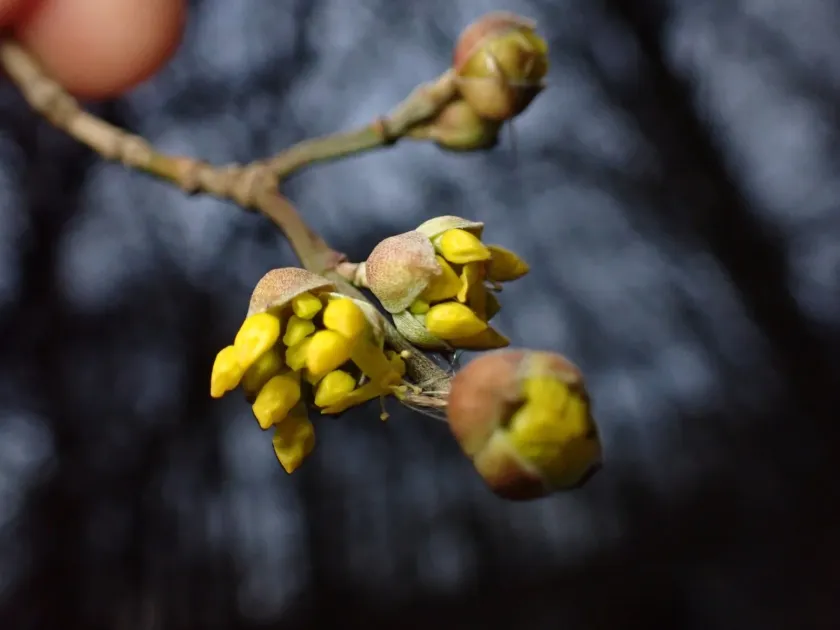
Description
Sowing dates
Propagating Cornus officinalis by seeds is a complex and lengthy process due to the seed's deep dormancy, which requires a stratification period of 12 to 18 months. For professional orchards, vegetative propagation methods such as grafting, budding, or softwood cutting in climate-controlled greenhouses are highly preferred for consistency.
Seedlings should be planted in their permanent location during the autumn, a few weeks before the ground freezes, or in the early spring before sap flow begins. Ensuring that the root system does not dry out is critical, so immediate watering and mulching around the base of the tree are necessary to establish the plant.
The planting distance depends on the chosen training system, generally ranging from 4x4 to 5x5 meters. Because the plant is cross-pollinating, it is essential to plant multiple cultivars in the same orchard to ensure adequate fruit set and a productive harvest each season.
In the early years, regular structural pruning is necessary to build a strong canopy. Pruning should be performed during the dormant season, focusing on removing crossing, diseased, or excessive branches to optimize airflow and sunlight penetration into the fruiting wood.
Although it grows relatively slowly, Cornus officinalis is a remarkably long-lived tree. With proper management and minimal stress, these trees can remain productive for 50 to 100 years, making them a sustainable and valuable long-term crop for any orchard.
Growing requirements
This plant belongs to the Cornaceae family and is native to regions of East Asia, including China, Korea, and Japan. In its natural habitat, it typically grows as an understory tree in forests, favoring areas with moderate soil moisture and protection from severe, drying winds.
The tree has specific soil preferences, requiring fertile, well-draining loamy or sandy soils with a neutral to slightly alkaline pH. It is crucial to avoid sites with waterlogged or stagnant groundwater, as the roots are highly susceptible to rot when exposed to excessive soil moisture.
Climate is a vital factor; the tree is cold-hardy, but its early blooming habit makes it susceptible to late spring frosts that can destroy the flowers and reduce the potential yield. Sites with full sun are preferred, although partial shade is acceptable in regions with extremely hot summers.
Agricultural management requires consistent irrigation, particularly during critical development stages such as flowering and fruit filling. Drought stress during these periods often leads to premature fruit drop and a significant decline in the overall quality and size of the harvested product.
Fertility should be maintained through the application of organic amendments in autumn and targeted mineral fertilizers at the start of the growing season. Applying mulch helps conserve soil moisture and suppresses weed competition, which is essential for young, developing trees.
Yield
Cornus officinalis typically begins to bear fruit around the age of 5 to 7, with full commercial yields usually achieved by the time the tree is 10 to 12 years old. Success depends on selecting the right cultivars and ensuring optimal environmental conditions during the pollination window.
In well-managed commercial orchards, a mature tree can produce between 20 and 50 kilograms of fruit per season. Advanced breeding programs have resulted in cultivars that offer more consistent yields compared to wild-type specimens, making them ideal for large-scale operations.
The fruits are highly valued for their nutritional profile, containing high levels of organic acids, tannins, vitamins, and antioxidants. These components make the fruit a sought-after raw material for the pharmaceutical industry, specifically in traditional medicine formulations.
Yield cycles can be managed through balanced pruning and consistent nutritional programs. By renewing the fruiting wood, growers can maintain a stable production level, mitigating the natural tendency of some trees toward alternate bearing patterns over time.
The selection of specific clones adapted to local climate zones is a key factor in ensuring high productivity. Growers should prioritize varieties that have been tested in their region to ensure that the trees are well-suited to the local climate and pest pressure.
Main diseases and pests
Cornus officinalis possesses a strong natural immunity to many common diseases, which is a major advantage for organic farming. However, in environments with poor ventilation or high humidity, fungal issues such as powdery mildew or leaf spot can occasionally occur.
The most significant pest for this crop is the fruit fly, which can damage the developing fruit and render it unsuitable for market or processing. Monitoring and, if necessary, the application of targeted insecticides during the fruit-set phase are essential for effective control.
Rodents may cause damage to the bark of younger trees during the winter months, necessitating the use of protective wire mesh or tree wraps. Keeping the orchard floor clean of excessive weeds also helps reduce habitats for pests that might otherwise target the tree's root zone.
While aphids and scale insects may occasionally infest the tree, their impact is usually manageable through minor interventions. Using selective, eco-friendly control agents helps maintain tree health without disrupting the beneficial insect populations in the orchard.
Good agricultural practices, such as proper spacing, timely pruning for airflow, and maintaining orchard sanitation, are the best defense against pests and diseases. A proactive approach to management significantly reduces the reliance on chemical treatments.
Harvesting
Harvesting Cornus officinalis is a labor-intensive task as the fruit ripens unevenly. Harvest should be conducted manually, selecting berries that have reached a deep, uniform color and a full texture while ensuring they are picked before they become overripe and prone to dropping.
Because the fruit is naturally prone to dropping when fully ripe, many growers use nets or mats under the canopy to catch the berries. This method minimizes damage to the fruit upon landing and significantly increases the speed of the harvest process.
Post-harvest handling is critical, as the fruit has a short shelf life. Berries should be cooled or sent for processing within 24 to 48 hours. Industrial applications include the production of extracts, jams, juices, and dried products, all of which are staples in the medicinal market.
When transporting the fruit to processing facilities, shallow, ventilated crates should be used to prevent crushing and fermentation. Maintaining low temperatures during transit is essential to preserve the biological activity of the fruit's medicinal compounds.
Professional management of the harvest schedule ensures that the final product meets the quality standards required for pharmaceutical and food production, maximizing the overall profitability of the orchard enterprise.