
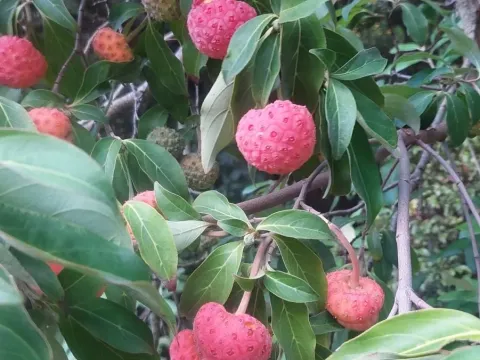
Himalayan strawberry tree
Cornus capitata Wall.
The Himalayan strawberry tree (Cornus capitata) belongs to the Cornaceae family. It is a striking evergreen tree originating from the Himalayan foothills and southwestern China, thriving in temperate to subtropical climates.
What the section contains
Himalayan strawberry tree
The species is moderately hardy, generally surviving temperatures down to -10°C. In colder climates, it is typically grown as a conservatory plant or in protected, sheltered garden positions.
Ideal soil conditions include well-drained, nutrient-rich loam that is slightly acidic. The plant is sensitive to waterlogged soils, which can lead to root failure, so adequate drainage is essential.
The plant prefers a position in full sun to partial shade. In areas with intense summer heat, afternoon shade is highly recommended to prevent leaf scorch and maintain leaf moisture.
Maintenance includes regular watering during the first few years of establishment, especially in dry periods, and the application of organic mulch to conserve moisture and regulate soil temperature.
The plant is primarily valued for its ornamental appeal, featuring creamy-yellow bracts in summer followed by large, strawberry-like, pinkish-red fruits in the autumn months.
The fruits are edible and possess a unique, somewhat mealy texture. While not a mainstream commercial crop, they are used in various artisanal food products like jams, jellies, and desserts.
Yields vary depending on local pollination conditions and tree age; mature specimens can be quite productive, providing a significant harvest of fruit clusters in late autumn.
In the culinary sector, the fruit's distinct flavor profile makes it a niche ingredient for exotic preserves, although it remains secondary to the plant's massive aesthetic value in landscaping.
Commercial plantations are rare, but the species is frequently utilized in permaculture and edible landscaping projects where the goal is a combination of beauty and food production.
Common pests include scale insects and aphids, which can infest the underside of leaves and young stems, causing sap depletion and potentially promoting the growth of sooty mold.
Fungal issues, such as leaf spot and powdery mildew, are the most frequent health concerns, especially in regions with high humidity or poor air circulation within the canopy.
Root rot caused by Phytophthora species is a serious threat if the soil structure does not allow for efficient drainage, leading to wilting and sudden dieback of branches.
Integrated pest management, including regular inspection and the use of horticultural oils, is effective for controlling minor infestations of sap-sucking insects.
Pruning is not only for aesthetics but also for plant health, as removing crowded inner branches significantly reduces the risk of fungal proliferation by improving airflow.
Harvesting should occur when the fruits have turned a deep, vibrant red and feel soft, indicating full ripeness. They are highly fragile and prone to bruising if handled roughly.
The harvest must be conducted by hand, as mechanical harvesting methods are currently non-existent for this delicate species due to the nature of the soft fruit.
Post-harvest life is extremely limited, and the fruits should be consumed or processed into preserves within 24 to 48 hours to maintain quality and prevent rapid microbial spoilage.
To extend utility, growers often opt for immediate freezing or dehydration, which preserves the nutritional compounds and allows for year-round culinary use.
The late-season nature of the harvest makes this plant an important food source for local bird populations, so gardeners should plan accordingly if they wish to secure a personal yield.