
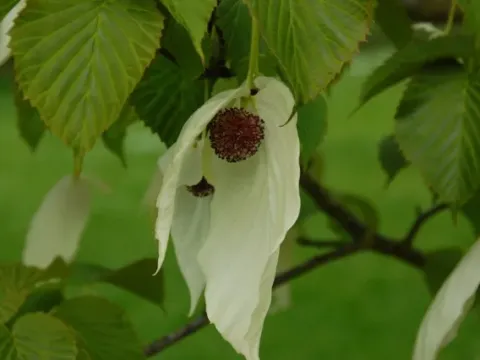
Davidia
Davidia
The Davidia, scientifically known as Davidia involucrata, belongs to the Davidiaceae family. Native to the mountainous regions of central and western China, this tree is highly prized for its large, white, wing-like bracts that resemble doves.
What the section contains

Davidia
To cultivate Davidia successfully, one must provide a site with deep, fertile, and well-drained soil. It thrives in loamy substrates rich in organic matter, as the root system requires consistent moisture but cannot tolerate waterlogging.
Climate is a critical factor for this culture. While it prefers cool, temperate conditions, it is sensitive to severe frost during its juvenile stage. Planting in a sheltered position, away from drying or freezing winds, significantly improves survival rates.
Regarding light, Davidia prefers partial shade or dappled sunlight. Intense, direct sun exposure during the hottest parts of the day can cause leaf scorch, particularly in specimens planted in areas with lower humidity.
Maintenance involves mulch application to conserve soil moisture and suppress weeds. Because it is a slow-growing tree, patience is required, and minimal pruning should be done only to remove damaged or crossing branches.
Davidia is generally robust, but it can be susceptible to fungal leaf spots under conditions of poor air circulation or extended periods of high humidity during the early growing season.
Pests such as spider mites may pose a threat in dry, hot weather. Regular monitoring of the foliage and increasing atmospheric moisture around the tree can help mitigate these infestations.
Poor soil conditions, especially high alkalinity, can lead to nutrient deficiencies such as iron chlorosis, which hinders chlorophyll production and results in pale or yellowing leaves.
Root rot remains the most serious threat caused by improper watering techniques. Ensuring the soil structure provides adequate drainage is essential to preventing the development of water-borne pathogens.
Overall, the health of the tree is maintained through balanced fertilization and sanitation. Removing debris from under the canopy prevents the accumulation of overwintering stages of potential pests and fungal spores.