
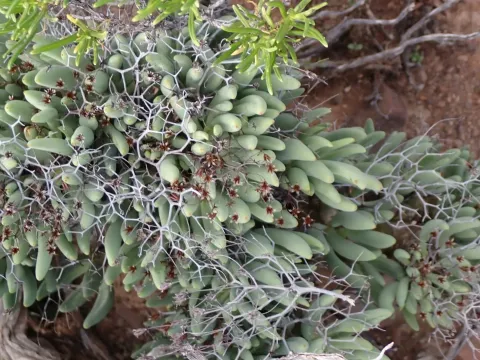
Tylecodon
Tylecodon
Propagation of Tylecodon is typically achieved through seeds or stem cuttings, requiring specific handling to ensure successful establishment.
What the section contains
 Tylecodon albiflorus
Tylecodon albiflorus
Tylecodon albiflorus
 Tylecodon bodleyae
Tylecodon bodleyae
Tylecodon bodleyae
 Tylecodon buchholzianus
Tylecodon buchholzianus
Tylecodon buchholzianus
 Tylecodon ectypus
Tylecodon ectypus
Tylecodon ectypus
 Tylecodon ellaphieae
Tylecodon ellaphieae
Tylecodon ellaphieae
 Tylecodon leucothrix
Tylecodon leucothrix
Tylecodon leucothrix
 Tylecodon nolteei
Tylecodon nolteei
Tylecodon nolteei
 Tylecodon paniculatus
Tylecodon paniculatus
Tylecodon paniculatus
 Tylecodon pearsonii
Tylecodon pearsonii
Tylecodon pearsonii
 Tylecodon racemosus
Tylecodon racemosus
Tylecodon racemosus
 Tylecodon reticulatus
Tylecodon reticulatus
Tylecodon reticulatus
 Tylecodon rubrovenosus
Tylecodon rubrovenosus
Tylecodon rubrovenosus
 Tylecodon singularis
Tylecodon singularis
Tylecodon singularis
 Tylecodon sulphureus
Tylecodon sulphureus
Tylecodon sulphureus
 Tylecodon wallichii
Tylecodon wallichii
Tylecodon wallichii
Tylecodon
Seeds are sown in early spring or late winter, using a very sandy and porous substrate that allows for rapid drainage and aeration.
The seeds should be sown on the surface of the growing medium and kept in a warm environment to trigger germination, avoiding deep burial.
Stem cuttings must be allowed to callus over for several days in a shaded area before they are placed into the growing medium to prevent rot.
Consistent temperatures around 20–25 degrees Celsius are optimal for both seed germination and root development of cuttings.
Tylecodon is a genus of succulent plants within the Crassulaceae family, native to the arid landscapes of Southern Africa and Namibia.
These plants are winter growers, meaning they remain active during cooler months and enter a period of summer dormancy when heat increases.
The substrate must be highly inorganic, consisting primarily of coarse sand, pumice, and grit to prevent moisture retention near the roots.
Light requirements are high; these plants thrive in bright, filtered light but should be protected from intense mid-day sun to avoid epidermis damage.
Watering protocols must follow the seasonal dormancy cycle, reducing or withholding water entirely during the summer rest period to prevent fungal infections.
The primary threat to Tylecodon health is root rot, triggered by poor drainage or overwatering during the dormant summer season.
Mealybugs are common pests that infiltrate the leaf axils, causing stunted growth and potential structural damage to the stems.
Spider mites may affect plants kept in environments with extremely low humidity and stagnant air, leading to pale discoloration of the stems.
Effective management includes using systemic insecticides, improving ventilation, and ensuring that the plants are kept in a well-draining environment.
Regular monitoring for signs of stress or infestation is crucial, as the succulent nature of these plants makes them susceptible to rapid decay if damaged.