
Tylecodon ellaphieae
Tylecodon ellaphieae
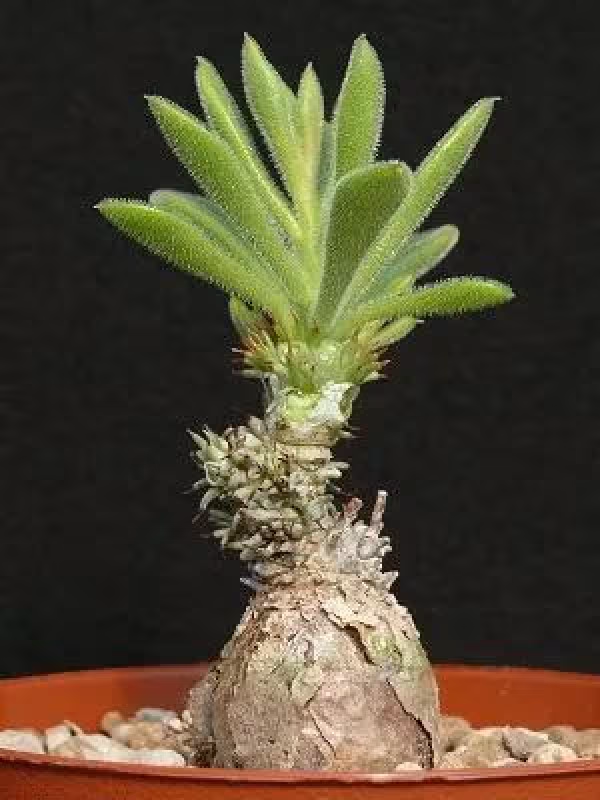
Description
Growing requirements
Tylecodon ellaphieae is a distinctive succulent species belonging to the Crassulaceae family. Native to the arid landscapes of South Africa, this plant has evolved to thrive in rocky environments where water is scarce and drainage is instantaneous.
Botanically, it is characterized by a compact, often tuberous base or caudex, from which short, knobby stems emerge. It is known for its deciduous nature, shedding its fleshy leaves during the summer dormant season and sprouting new growth during the cooler, wetter months.
The cultural requirements are strict: the soil must be highly inorganic, consisting of coarse sand, pumice, or perlite mixed with minimal potting soil. Good airflow around the root zone is mandatory to prevent the physiological collapse of the plant.
Climate conditions should mimic its natural habitat. It requires high light levels, preferably morning sun, to maintain a compact growth habit. In very hot climates, partial shade during the peak of the day is recommended to prevent scorching.
Watering management is the most critical aspect of maintenance. One should only water when the growth cycle is active and the substrate is completely dry. During the dormant summer months, the plant should be kept almost entirely dry to prevent rotting.
Main diseases and pests
The primary threats to Tylecodon ellaphieae are pathogens associated with moisture. Root rot and stem rot are the most common causes of plant loss, almost always resulting from overwatering or inadequate soil aeration.
Mealybugs are the most persistent insect pests for this species, frequently hiding in the crevices of the knobby stems. Early detection and application of systemic insecticides are essential to keep the infestation from causing structural damage.
Spider mites can become an issue in stagnant air environments. If the plant is kept in an area with poor air circulation, mites can rapidly colonize the foliage, leading to yellowing and premature leaf drop.
Root mealybugs pose a significant risk, as they are often undetected until the plant shows signs of failure. Periodic repotting in sterilized soil is the best preventative measure against soil-borne pests.
Failure to provide adequate seasonal light levels leads to etiolation, a condition where the plant grows weak, spindly, and pale. An etiolated plant is significantly more susceptible to mechanical breakage and subsequent fungal infections.