
Tylecodon bodleyae
Tylecodon bodleyae
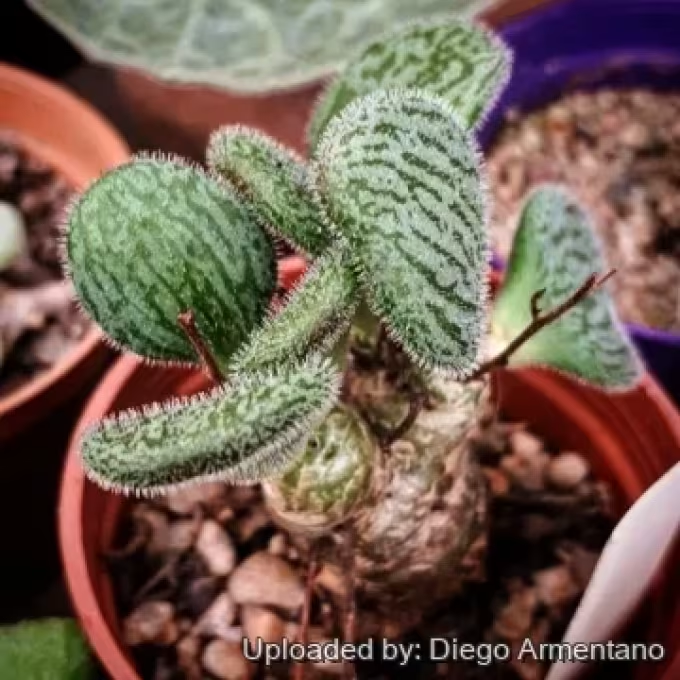
Description
Growing requirements
Tylecodon bodleyae is a unique caudex-forming succulent belonging to the Crassulaceae family. Native to the arid regions of Southern Africa, it is evolutionarily adapted to harsh environments characterized by low rainfall and high heat.
Cultivation of this species requires a highly inorganic and well-draining substrate. A mix consisting of pumice, coarse sand, and a minimal amount of organic soil is essential to prevent root asphyxiation and rot.
The plant demands bright, filtered light to maintain its structural integrity. Direct, harsh midday sun can scorch the epidermis, while insufficient light leads to etiolation and weakens the plant's overall development.
A rigorous seasonal cycle must be observed, with a pronounced dormancy period during the hottest summer months. During this time, the plant must remain dry to simulate its natural habitat and ensure long-term health.
The primary use of Tylecodon bodleyae is decorative, favored by succulent enthusiasts for its sculptural appearance. It is a slow-growing specimen that is highly sought after for private collections and botanical displays.
Main diseases and pests
The most significant threats to Tylecodon bodleyae are fungal infections, typically triggered by stagnant air and waterlogged soil conditions.
Common pests include mealybugs, which tend to infest the leaf axils and the complex, wrinkled bark of the caudex.
Root system vulnerability is high; soil-borne pathogens can destroy the plant rapidly if it is kept in unsuitable, non-draining media.
Cultural control is the most effective approach: maintaining dry conditions during dormancy and ensuring high-quality airflow in the growing area.
When infestation occurs, manual removal or targeted use of systemic insecticides are the standard methods to preserve the plant's aesthetic value.