
Wulfen's houseleek
Sempervivum wulfenii
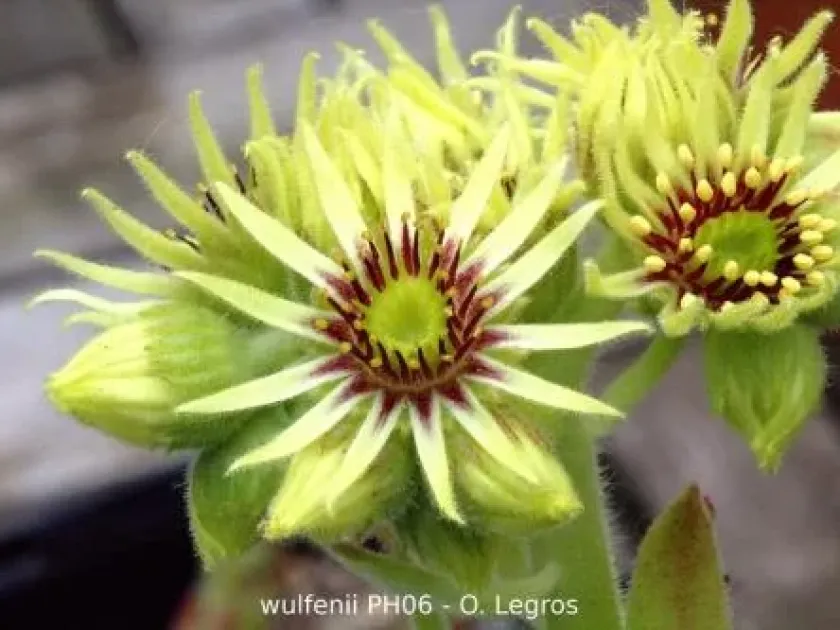
Description
Growing requirements
Wulfen's houseleek Sempervivum wulfenii is a perennial succulent plant belonging to the Crassulaceae family. It is characterized by compact rosettes of fleshy, water-storing leaves, which are typical adaptations for surviving in harsh, high-altitude alpine environments.
The native range of this species is primarily the Alps, where it thrives on rocky slopes and thin, gravelly soils. It is well-adapted to extreme temperature fluctuations and the nutrient-poor conditions found in mountainous regions.
For successful cultivation, the plant requires excellent drainage and a sandy or gritty substrate. It is essential to prevent moisture accumulation around the roots, as excessive water is the primary cause of decline for this alpine succulent.
This species is highly heliophilic, demanding a location with full, direct sunlight to maintain its compact growth form and vibrant leaf color. When kept in shaded areas, the plant may become etiolated and lose its architectural appeal.
Agricultural management is minimal, focusing on avoiding over-fertilization, which makes the plant soft and susceptible to rot. The plant performs best in a rock garden setting where environmental conditions mimic its natural mountain habitat.
Main diseases and pests
The most significant threat to Wulfen's houseleek is fungal infection triggered by poor drainage or high humidity. If the substrate remains waterlogged, the basal parts of the leaves quickly rot, often leading to the collapse of the entire rosette.
Pests such as mealybugs can occasionally infest the plant, hiding in the tight spaces between leaves. These pests are notoriously difficult to control manually and usually require the application of appropriate systemic insecticides.
Aphids are another potential threat, particularly during the flowering stage when the plant is pushing up its stalks. These insects extract sap and weaken the plant, necessitating timely intervention to maintain the health of the succulent.
Garden pests like slugs and snails may graze on the fleshy leaves, particularly in damp seasons. Implementing physical barriers or using specific baits can protect the rosettes from being disfigured by these common garden visitors.
Maintaining a clean, well-aerated growing environment is the best preventative strategy against disease. By avoiding excessive organic matter in the soil and ensuring good airflow around the plants, growers can prevent most common health issues.