
Tylecodon reticulatus
Tylecodon reticulatus
Description
Growing requirements
Tylecodon reticulatus is a fascinating succulent belonging to the Crassulaceae family. It originates from the arid regions of South Africa, where it has evolved to thrive in rocky environments with limited water availability.
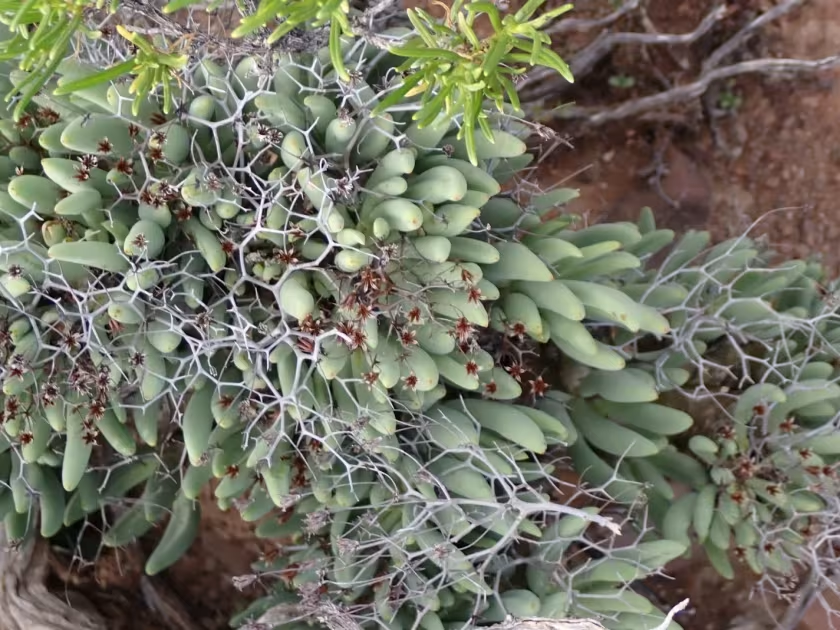
Botanically, this species is noted for its peculiar growth habit, where dried flower stalks persist on the stem for years, creating a distinctive reticulated or netted appearance that gives the plant its name.
Agricultural requirements include a highly porous, mineral-based substrate. The potting mix must facilitate rapid drainage, as the plant is extremely susceptible to root rot if left in standing water or damp soil for prolonged periods.
The plant thrives under bright, direct light conditions during its active growing season. However, in greenhouse environments, light shading during peak summer heat is necessary to prevent severe epidermal damage and sunburn.
Temperature management is critical, with a specific focus on a distinct cooling period during the winter. This dormant stage is essential for the physiological health of the plant and encourages proper flowering in the subsequent season.
Main diseases and pests
Root rot, driven by soil-borne fungi, remains the primary threat to this species. It is typically a direct consequence of overwatering during the dormant phase or improper soil structure that fails to allow oxygen reach the roots.
Mealybugs are the most persistent pests affecting Tylecodon species. They often hide within the complex structure of the stems, making them difficult to detect and treat without consistent monitoring and localized systemic insecticides.
Spider mites can become problematic in dry greenhouse conditions. They puncture the skin of the plant, which not only causes cosmetic damage but also serves as an entry point for fungal and bacterial infections.
Etioalation occurs when light levels are insufficient, causing the stems to grow thin and weak. These distorted stems are significantly more prone to pest colonization and mechanical damage during handling.
Non-sterile media may introduce soil pathogens such as nematodes. Utilizing high-quality, pre-treated substrates and maintaining high hygiene standards is essential for the longevity of a succulent collection.