
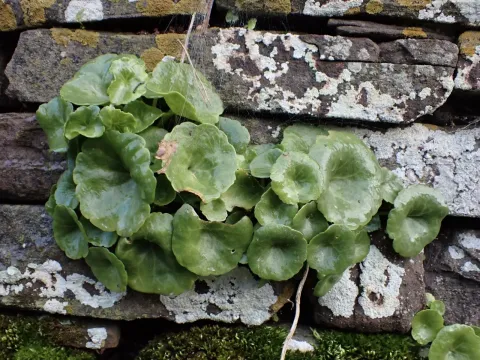
Umbilicus
Umbilicus
Umbilicus is propagated primarily through seeds or vegetatively using daughter rosettes. Seeds are sown in specialized succulent substrate in early spring, maintaining a stable temperature of approximately 20–22 degrees Celsius.
What the section contains
 Navelwort
Umbilicus gaditanus
Navelwort
Umbilicus gaditanus
 Pennywort
Umbilicus rupestris
Pennywort
Umbilicus rupestris
 Umbilicus chloranthus
Umbilicus chloranthus
Umbilicus chloranthus
 Umbilicus heylandianus
Umbilicus horizontalis
Umbilicus horizontalis
Umbilicus heylandianus
Umbilicus heylandianus
Umbilicus horizontalis
Umbilicus horizontalis
 Umbilicus intermedius
Umbilicus intermedius
Umbilicus intermedius
 Umbilicus parviflorus
Umbilicus parviflorus
Umbilicus parviflorus
 Yellow navelwort
Umbilicus luteus
Yellow navelwort
Umbilicus luteus
Umbilicus
When sowing, seeds are not buried deeply but are lightly pressed into the surface of moistened sand or a peat-based mix. Containers are covered with glass or film to maintain high humidity, with periodic ventilation provided for the seedlings.
Germination of Umbilicus is slow, making it crucial to prevent the top layer of soil from drying out completely. Once a pair of true leaves forms, seedlings are transplanted into individual containers with excellent drainage.
Vegetative propagation via cuttings or leaf segments is conducted during the summer. It is essential to let the cuttings air-dry for 24 hours to prevent rot upon contact with damp soil.
Transplanting into open ground or permanent pots should only occur after the risk of frost has passed, as the culture is highly sensitive to sudden temperature fluctuations.
Umbilicus belongs to the Crassulaceae family and is a perennial succulent adapted to stony soils and rocky outcrops. Its primary range covers regions of the Mediterranean, the Caucasus, and parts of Southwest Asia.
The plant thrives in well-lit areas but struggles with direct, intense midday heat in southern climates. Ideal conditions include filtered sunlight or light shade during the hottest hours of the day.
The culture is not demanding regarding soil composition, provided that the substrate offers high aeration and permeability. In dense soils, the root system is highly prone to rot, leading to plant collapse.
Watering must be moderate; the soil ball must dry out almost completely between irrigations. During the winter dormancy period, watering is reduced to a minimum, with temperatures kept between 10 and 15 degrees Celsius.
Umbilicus is characterized by fleshy, peltate leaves arranged in a basal rosette, and an erect flower stalk with bell-shaped blossoms, making it a popular choice for rock gardens and landscape design.
The primary threat to Umbilicus is soil waterlogging, which quickly triggers various forms of rot. Excessive moisture causes the roots to blacken and die, rendering the plant non-viable in a short timeframe.
Pests such as mealybugs and spider mites cause the most damage. They feed on plant sap, leading to leaf deformation, yellowing, and the eventual loss of the entire above-ground structure.
In poorly ventilated indoor spaces, powdery mildew may develop, appearing as a whitish coating on the foliage. Systemic fungicides and microclimate adjustments are used for control.
Mistakes in care, such as abrupt changes in environment or the use of over-fertilized soil, weaken the plant's immunity. This makes it susceptible to phytophthora and other fungal diseases affecting succulents.
Prevention relies on regular inspections, adherence to a proper watering regimen, and the use of sterile soil during repotting. Prompt removal of infected tissue can prevent the spread of pathogens throughout the crop.
The economic use of Umbilicus is primarily decorative. In some traditional practices, certain species are utilized as medicinal remedies, so harvesting of leaves is conducted during peak vegetation periods.
For medicinal purposes, fresh leaves are collected, known for their succulence and specific bioactive compounds. It is important to harvest the material in the early morning when moisture content in the tissues is optimal.
Harvesting for commercial decorative sale involves careful extraction with the root ball or the separation of daughter rosettes. This preserves the plant's aesthetic value and ensures quick establishment in its new location.
During harvesting, clean and disinfected tools must be used to avoid infecting open wounds with fungal spores or bacteria. Storing harvested fresh material is only feasible under refrigeration.
It is important to note that the culture grows quite slowly; therefore, during large-scale harvesting, ecological principles must be followed by leaving sufficient parent specimens to ensure population recovery.