
Tylecodon paniculatus
Tylecodon paniculatus
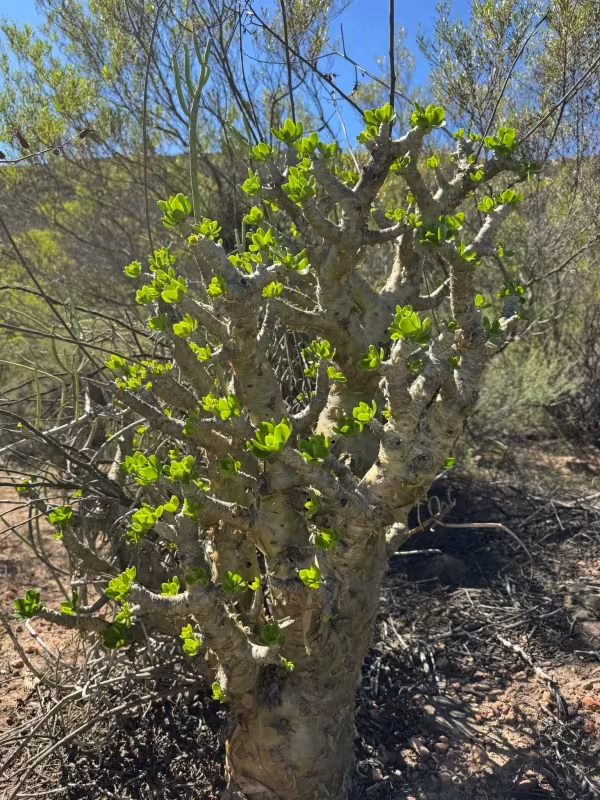
Description
Growing requirements
Tylecodon paniculatus is a remarkable succulent belonging to the Crassulaceae family, native to the arid landscapes of South Africa and Namibia. It is widely recognized for its thick, succulent trunk, which features a unique exfoliating bark that peels in papery layers.
In its natural habitat, the plant experiences a cycle of growth and dormancy. During the hot, dry season, the plant sheds its leaves to conserve moisture, relying solely on its stored water reserves in the fleshy, swollen branches and trunk.
Successful cultivation of Tylecodon paniculatus requires a very sunny location with high light intensity. If kept indoors, it should be placed in the brightest possible spot to prevent etiolation and maintain its structural integrity.
The substrate must be extremely porous and well-draining. A mix consisting primarily of grit, coarse sand, and perlite, with very little organic matter, is ideal for mimicking the stony, nutrient-poor soils of its native region.
Watering practices must be strictly seasonal. During the active growth period, water thoroughly when the soil has completely dried out. Once the leaves begin to yellow and drop, irrigation should be gradually reduced to minimal levels until spring.
Main diseases and pests
Root rot is the most significant threat to the health of this succulent, usually caused by overwatering during the dormancy period. Because the plant is inactive, it cannot process moisture, leading to rapid decay of the root system and base.
Mealybugs are the most common pests found on this species. They frequently hide in the crevices of the branches and beneath the peeling bark layers, making them difficult to detect and eradicate without thorough manual inspection.
In environments with poor air circulation, fungal pathogens can easily take hold of the plant tissues, especially if humidity levels are high. Ensuring a consistent breeze or using an oscillating fan can significantly reduce this risk.
Spider mites may affect the plant during hot, dry summer spells, causing stunted growth and leaf discoloration. Early detection through regular monitoring and the use of targeted acaricides is essential for control.
Physical trauma to the bark should be avoided at all costs, as these openings serve as entry points for secondary infections. If pruning is necessary, tools must be sterilized and wounds treated with antifungal dusting agents.