
Tylecodon buchholzianus
Tylecodon buchholzianus
Description
Growing requirements
Tylecodon buchholzianus is a distinctive dwarf succulent belonging to the Crassulaceae family. Native to the arid regions of Namibia and South Africa, this plant has evolved to survive in harsh, rocky desert environments by adopting a succulent, deciduous growth habit.
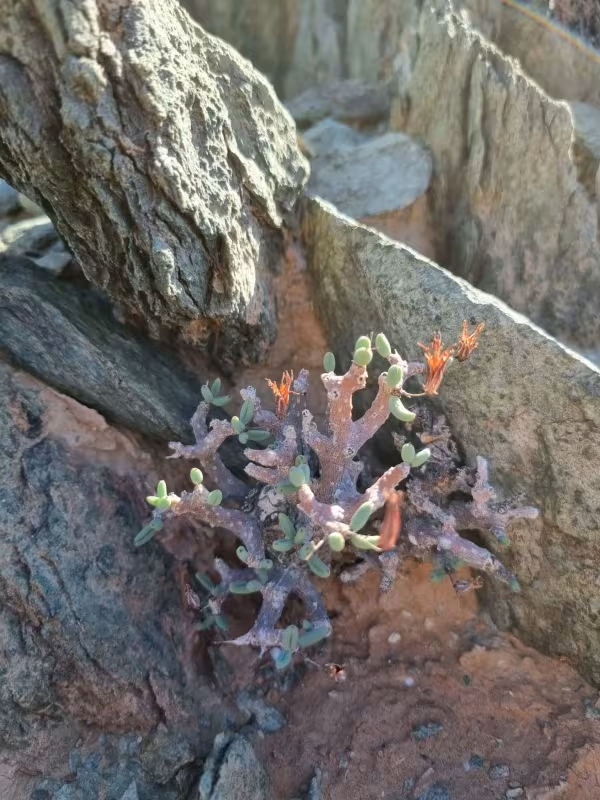
Botanically, it features highly branching, contorted stems with papery, peeling bark. During the growth season, it produces tiny, ephemeral leaves that drop off as the plant enters dormancy, leaving behind an architectural, wood-like structure that is highly prized by collectors.
Successful cultivation requires high light intensity. Without sufficient exposure to direct sunlight, the stems will become etiolated and lose their naturally compact, twisted character, resulting in a plant that is structurally weak and less aesthetically appealing.
The soil requirements are strict: a highly porous, well-draining mineral mix is mandatory. A combination of coarse sand, pumice, and a very small amount of organic material mimics the native habitat and prevents water from pooling around the root base.
Watering must strictly follow the plant's natural rhythm. During the growing season, moderate water is needed, but the substrate must dry out completely between applications. During the summer dormancy period, all watering should be ceased to protect the delicate root system.
Main diseases and pests
The primary threat to Tylecodon buchholzianus is overwatering, which leads to rapid root rot and stem decay. Because the plant is adapted to extreme aridity, even slight excess moisture in the soil can be fatal, especially when coupled with cool temperatures.
Mealybugs are the most common pests, often concealing themselves within the intricate crevices of the gnarled stems. Due to the plant's complex structure, infestation can be difficult to notice, requiring regular and thorough inspection of the branches.
Spider mites can also become a problem if the ambient air is too dry and lacks proper circulation. Maintaining good airflow around the plant is the best preventative measure against these microscopic pests that feed on the plant's delicate tissues.
Root nematodes can cause significant damage if the soil is contaminated. To prevent this, always ensure that any growing medium used has been properly sterilized or sourced from reputable suppliers who guarantee high-quality, pest-free components.
Fungal pathogens often appear as a secondary consequence of poor cultural practices. If the plant shows signs of softening or discoloration, immediate drying of the soil and, if necessary, surgical removal of affected parts may be required to save the specimen.