
Tylecodon leucothrix
Tylecodon leucothrix
Description
Growing requirements
Tylecodon leucothrix is a highly decorative dwarf succulent belonging to the Crassulaceae family. Native to the arid regions of South Africa, it has evolved to thrive in harsh environments characterized by prolonged droughts and high temperature fluctuations.
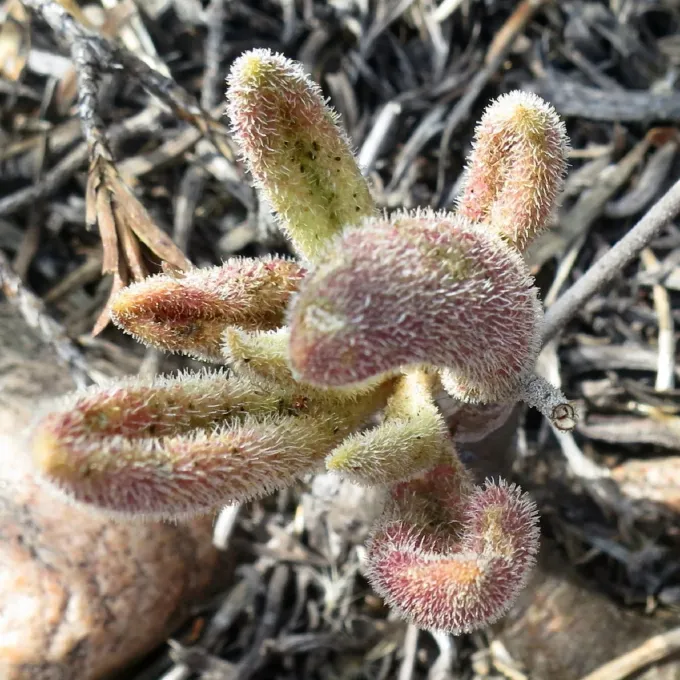
The plant is known for its fascinating caudiciform stem covered in peeling bark and its distinctive dense coating of white trichomes (hairs) on the leaves. These hairs serve a dual purpose: reflecting intense solar radiation and trapping moisture from fog and dew.
For successful cultivation, a highly inorganic, free-draining substrate is required. A mixture consisting primarily of pumice, coarse sand, and a small portion of potting soil will ensure optimal aeration and prevent the root suffocation that commonly occurs in heavier media.
This species is a winter-growing succulent, meaning it enters a period of active growth during cooler months. Providing sufficient light is paramount; without enough direct sunlight, the plant will become etiolated and lose its compact, attractive morphology.
Watering management should follow the cycle of the plant's growth. During the active winter season, water moderately, allowing the soil to dry completely between applications. During the summer dormancy period, water should be strictly limited to prevent the plant from shriveling excessively.
Main diseases and pests
Root rot is the most significant threat to Tylecodon leucothrix, usually caused by improper watering techniques or substrate that holds too much moisture. Once the roots are compromised, the decay can quickly spread to the main caudex, often leading to irreversible damage.
Mealybugs are the most common pests found on this species. They frequently hide within the dense white hairs of the leaves, making them difficult to detect during initial stages of an infestation. Regular inspection is essential for early intervention.
Spider mites can also be problematic, particularly in environments with very low humidity and poor air circulation. They cause visible damage to the leaf surface, leading to discolored patches and stunted development of the new leaves.
Applying systemic insecticides is an effective way to manage pest populations, but caution must be exercised regarding the application method to avoid damaging the delicate leaf structure. Always follow manufacturer guidelines for dosage and application frequency.
To ensure long-term health, maintain a clean growing environment and provide adequate ventilation. Proper airflow helps regulate humidity levels around the foliage, significantly reducing the risk of fungal pathogens and pest outbreaks.