
Tylecodon wallichii
Tylecodon wallichii
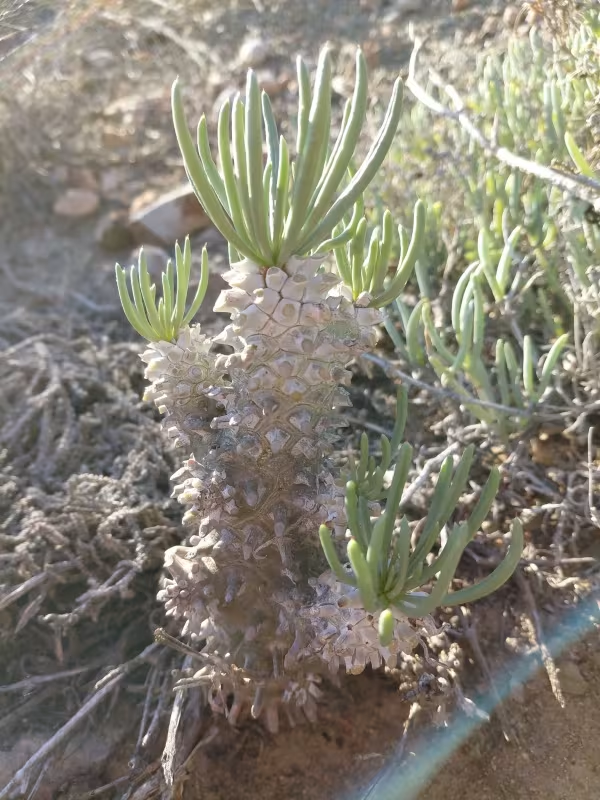
Description
Growing requirements
Tylecodon wallichii is a remarkable succulent species belonging to the Crassulaceae family, native to the arid landscapes of South Africa. As a winter-growing plant, it has evolved to thrive in environments with specific seasonal patterns, making it a unique specimen for cultivation.
The botanical structure of the plant features a fleshy, cylindrical stem designed to store water, which allows the species to survive the harsh, rainless months of the Southern Hemisphere summer. The leaves are typically transient, emerging during the cooler months and abscising as temperatures rise.
Successful agricultural management of this species requires a highly porous and well-draining substrate. Growers should prioritize a mineral-heavy potting mix, often utilizing coarse sand, pumice, or expanded clay to prevent the critical issue of stagnant moisture around the roots.
Light intensity is the most vital factor for maintaining structural integrity. Tylecodon wallichii requires full sun to maintain its compact, robust form; insufficient light will cause the plant to etiolate, significantly weakening its internal support structures and overall health.
Watering protocols must be strictly adjusted according to the plant's seasonal cycle. Irrigation should only occur during the active growth phase, typically in the autumn and winter months, while the plant must be kept dry throughout the summer dormant period to simulate its natural habitat.
Main diseases and pests
The most significant threat to the survival of this species is root rot caused by overwatering, particularly when environmental temperatures are high or when the plant is in its dormant state. Maintaining a dry environment during summer is essential for the long-term viability of the root system.
Pest issues primarily involve sap-sucking insects, such as mealybugs and spider mites, which exploit the plant's succulent tissue. Regular monitoring is advised, and infestations should be addressed immediately with appropriate insecticidal treatments or systemic controls to prevent severe tissue damage.