
Thompson's houseleek
Sempervivum thompsonianum
Description
Growing requirements
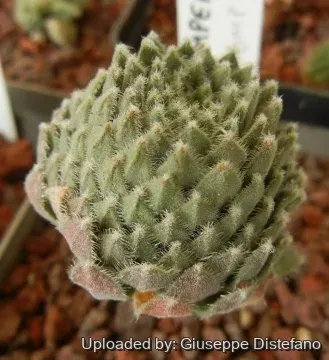
Thompson's houseleek (Sempervivum thompsonianum) belongs to the Crassulaceae family. It is a perennial succulent plant characterized by a compact rosette shape and the ability to store moisture in its fleshy leaves.
The plant originates from the mountainous regions of Central Asia. In the wild, it is adapted to the harsh conditions of high altitudes, where rocky soils and significant temperature fluctuations prevail, ensuring its exceptional resilience.
The crop prefers well-lit areas with direct sunlight, as insufficient light causes the rosettes to lose their characteristic shape and density. Optimal growth is achieved on sandy or rocky, well-drained soils with a neutral or slightly alkaline pH.
The most important requirement is to avoid water stagnation. Excessive moisture in the root zone quickly leads to tissue rot and the death of the rosette, making this plant an ideal choice for alpine gardens and rockeries.
The plant demonstrates high frost resistance and drought tolerance, making it a viable candidate for cultivation in temperate climates without the need for additional winter protection.
Main diseases and pests
The primary threat to Thompson's houseleek is root rot, which occurs due to improper watering practices or poor soil aeration.
In high humidity conditions, rosettes can be affected by fungal diseases such as powdery mildew, which requires the application of copper or sulfur-based fungicides.
Among pests, aphids and mealybugs cause the most damage by sucking juices from young leaves, leading to the deformation of the rosette.
Additionally, young plants can be damaged in the spring by slugs and snails, which are attracted to the succulent tissues of the plant.
- Regular soil loosening around rosettes.
- Removal of dry and damaged leaves.
- Monitoring of substrate moisture levels.