
Tylecodon racemosus
Tylecodon racemosus
Description
Growing requirements
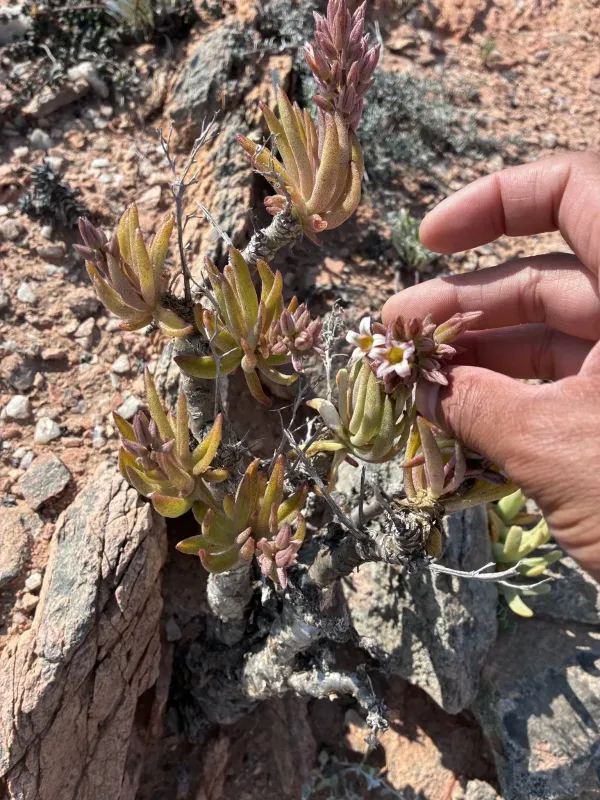
Tylecodon racemosus is a distinctive succulent species belonging to the Crassulaceae family. Native to the arid landscapes of South Africa, it has evolved to thrive in environments where water is scarce and sunlight is intense, demonstrating remarkable resilience.
The plant features a fleshy, succulent stem structure that serves as a reservoir for water storage during prolonged dry spells. Its leaves, which typically emerge in the cooler growing season, are clustered, giving the plant its specific name and unique architectural appeal.
Successful cultivation requires a growing medium that is highly porous and mineral-rich. A mix consisting of coarse sand, perlite, and a small percentage of gritty compost is ideal for preventing moisture retention, which can be detrimental to the plant's health.
Tylecodon racemosus requires full sun exposure to maintain its compact habit and health. Without sufficient light, the plant becomes etiolated, losing its structural integrity and becoming more susceptible to various physiological disorders.
Temperature management is critical for this species. It prefers cool nights and warm, sunny days. During its natural dormancy period, which usually coincides with the hottest summer months, it is essential to withhold water to mimic its native climatic cycle.
Main diseases and pests
Root rot remains the most common and dangerous threat to Tylecodon racemosus. It is almost exclusively caused by overwatering or the use of poorly draining soil, leading to the rapid decay of the underground parts of the plant.
Mealybugs are the primary pest species affecting this succulent. They often settle in the crevices between the stem and the base of the leaves, where they feed on the sap and produce a white, cottony substance that is easily visible.
Spider mites can also become a problem if the ambient humidity is kept too low for extended periods. Regular inspection of the plant's surface, especially during the active growth phase, is necessary to ensure early detection of these pests.
To control infestations, systemic insecticides can be used, although manual removal of the pests using a cotton swab dipped in isopropyl alcohol is often effective for small-scale collections.
Maintaining proper hygiene by keeping the growing area clean and ensuring good airflow is the best preventative strategy against disease. Healthy, well-spaced plants are significantly less likely to succumb to fungal or insect attacks.