

Disease · fungal · affects Arabica coffee, Asparagus, Carpathian bellflower
Especially harmful
Ascochyta blight
Ascochyta
Description
Symptoms
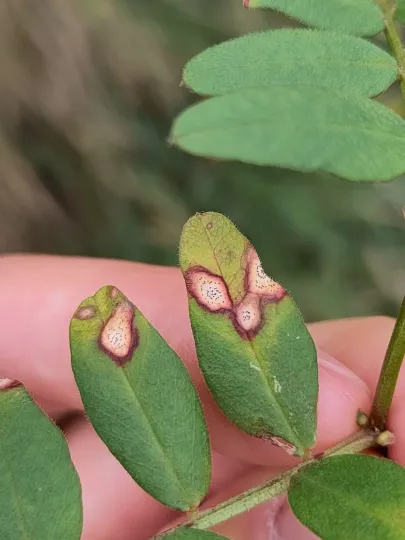
The primary symptom of Ascochyta blight is the appearance of necrotic lesions on leaves, stems, and pods. These spots are usually circular or irregular, brown to dark-brown in color, and often have a lighter-colored necrotic center.
A distinctive feature of these lesions is a dark margin or ring, and the presence of minute black dots within the dead tissue—these are the pycnidia, which are key diagnostic structures for identifying the disease.
Stem infections are particularly destructive, manifesting as elongated lesions or cankers that weaken the stem structure. This often leads to lodging, where the plants bend over and eventually die prematurely.
When pods and seeds are affected, the blight causes spotting and shriveling, significantly reducing seed quality. Infected seeds may show brown patches or mycelial growth, leading to poor germination rates.
In wet conditions, the pycnidia may exude masses of spores, which appear as a sticky substance on the surface of the lesions, further spreading the pathogen to adjacent leaves and stems.
Pathogen
Ascochyta blight is a widespread fungal disease caused by various species of the genus Ascochyta. These fungi are classified as pycnidial, as they produce small flask-shaped fruiting bodies known as pycnidia within the infected plant tissues.
The fungus is characterized by its ability to persist in crop residues, soil, and seeds. Because of this, it is a persistent pathogen in farming systems, capable of surviving harsh conditions until a suitable host is available.
This pathogen has a very broad host range, infecting critical crops such as chickpeas, peanuts, and industrial crops like hemp. It also affects various ornamental plants, such as the Carpathian bellflower, and tropical commodities including Coffea arabica and Coffea caneuga, as well as vegetables like watermelons.
The infection cycle typically begins with pycnidiospores being splashed by rain or wind-borne onto susceptible plant parts. High moisture levels allow the spores to germinate and penetrate the host tissue.
Once inside, the fungus spreads through the plant's vascular system and intercellular spaces, causing cell necrosis and interfering with the plant's overall metabolic functions.
Conditions for development
Ascochyta blight thrives in cool to moderate temperatures (18–25 °C) combined with high relative humidity. The fungus is especially aggressive during periods of prolonged rainfall or heavy dew.
Moisture is the essential trigger for the entire disease cycle; rain splashes are the primary method of dispersal for the spores within a field. Dry, windy weather generally slows the progression of the disease.
Agronomic factors like dense planting significantly contribute to disease spread. High canopy density creates a humid microclimate that prevents airflow and keeps foliage wet for longer periods, providing a perfect environment for infection.
The use of untreated, infected seeds is one of the most common ways the disease is introduced into new fields, often resulting in widespread primary infection from the moment of emergence.
Inadequate soil drainage or low-lying fields, which retain moisture, are prone to higher disease pressure compared to well-drained locations.
Why it matters
The economic impact of Ascochyta blight is significant, primarily due to the reduction in leaf surface area available for photosynthesis, which stunts plant growth and lowers yield potential.
Severe stem infection can cause lodging, making mechanical harvesting difficult and causing grain loss. In some cases, total crop failure may occur if weather conditions favor the pathogen.
Infected seeds lose their viability and market value. Furthermore, the spread of the pathogen can lead to secondary infections in storage if the grain is not dried properly before handling.
The need for repeated fungicide applications to manage the disease increases production costs, thereby lowering the overall profitability of the crop for the farmer.
Overall, Ascochyta blight reduces both the quantity and the commercial quality of the harvest, making it a major concern for farmers specializing in legumes and industrial crops.
Protection
The first line of defense is the use of disease-free, certified seeds. Seed treatment with effective fungicides is essential to eliminate any surface or internally-borne inoculum before sowing.
Implementing a proper crop rotation strategy is vital. Avoiding planting host crops on the same field for at least 3–4 years helps reduce the soil-borne inoculum level significantly.
Cultural practices such as deep plowing to bury crop residues are highly effective. This hastens the decomposition of the plant matter, where the fungus overwinters, effectively starving the pathogen.
Applying systemic or contact fungicides during the early stages of disease development is a standard approach to protect the crop during vulnerable growth phases and prevent an outbreak.
- Use resistant or tolerant cultivars when available.
- Ensure optimal plant spacing to promote airflow and decrease humidity.
- Balance fertilization to avoid overly succulent tissue that is easier for the fungus to penetrate.
In brief
23
Affects crops
Biology
Pathogens and affected parts
Pathogens
Ascochyta· fungus
Ascochyta doronici· fungus
Ascochyta asparagina· fungus
Ascochyta bohemica· fungus
Ascochyta rabiei· fungus
Ascochta tarda· fungus
Ascochyta tarda· fungus
Ascochyta maydis· fungus
Ascochyta zeae· fungus
Ascochyta zeina· fungus
Ascochyta gossypii· fungus
Ascochyta phaseolorum· fungus
Affected plant parts
leafwhole plantstem
Content graph
Affects crops · 23
Content graph
Connections · Ascochyta blight
Most often together:
Weeds
1 contact
Marketplace
Products · 16


Community
Discussion
No discussions yet — be the first.