
Asparagus ascochyta blight
Ascochyta asparagina
Description
How to identify
The causative agent of the disease is the microscopic fungus Ascochyta asparagina. It is an obligate plant pathogen belonging to the Ascomycota division. The fungus is characterized by the production of pycnidia, which are specialized fruiting bodies that release spores for reproduction.
Taxonomically, this species is a member of the genus Ascochyta. It acts as a specialized parasite that primarily targets Asparagus officinalis, disrupting the host's physiological functions. The pathogen is highly adapted to the specific microclimate created by asparagus foliage.
The life cycle involves a primary infection phase through pycnidiospores. These spores are dispersed by rain splash and wind, settling on healthy plant tissues. Upon germination, the fungus enters the tissue through natural openings or small wounds.
The fungus survives the winter as dormant mycelium or pycnidia within infected crop debris. When environmental conditions improve in the spring, the fungus reactivates, initiating the cycle of infection for the new season.
Optimal development occurs in environments with high humidity and moderate temperatures. The fungus requires water films on the plant surface for successful spore germination and penetration of the host's cuticle.
What it damages
Ascochyta asparagina primarily infects the stems and foliage of asparagus plants. The resulting necrosis compromises the plant's ability to perform photosynthesis, which is critical for storing energy in the crowns.
The economic impact of the disease includes reduced crop vigor and yield loss. Since asparagus is a perennial crop, chronic infection leads to the exhaustion of root reserves, potentially requiring premature removal of the entire planting.
Severe infestations cause premature browning and drying of the fern-like foliage. This weakening of the plant structure can lead to stem breakage and secondary opportunistic infections from other pathogens.
Productivity is significantly curtailed as infected plants cannot sustain normal growth. Farmers may face increased costs for chemical inputs and more frequent plantation maintenance due to the presence of the blight.
The disease tends to be more aggressive in environments with poor air circulation or extended periods of rainfall. Management of planting density is essential to limit the severity of the damage across the field.
Signs of infestation
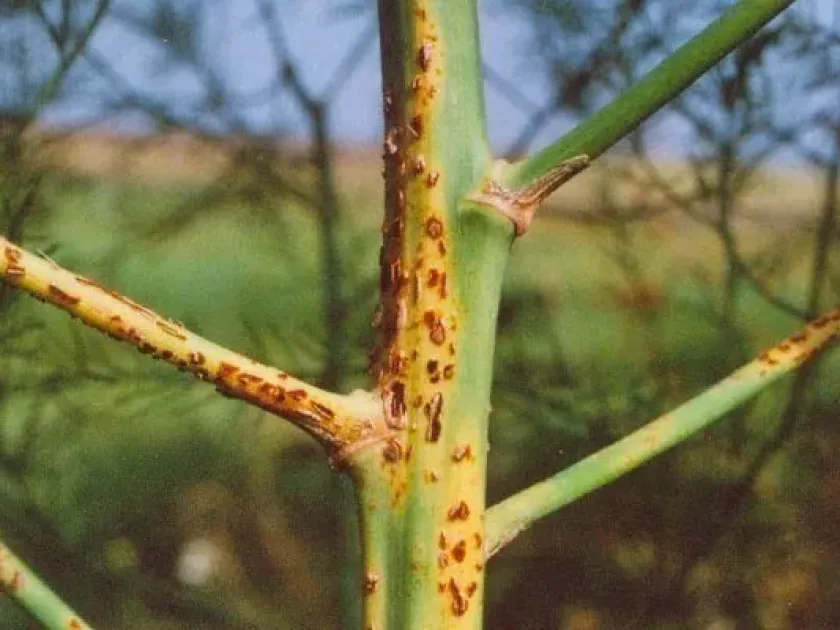
Early symptoms appear as small, pale lesions on stems and cladodes. These spots progressively enlarge and turn into dark brown or gray necrotic areas, often surrounded by a darker, clearly defined margin.
A distinctive feature of this infection is the presence of small, black, pin-head-sized dots within the necrotic spots. These are the pycnidia, which are vital for the identification of the disease in the field.
On larger stems, the lesions can coalesce, potentially girdling the stalk. This cuts off nutrient flow to the upper portions of the stem, causing them to yellow and wilt rapidly before eventually dying.
During periods of high humidity, a fungal exudate or spore mass may appear on the lesions. This mass is a clear indication that the pathogen is actively producing spores for further dissemination to adjacent healthy plants.
In advanced stages, the plant exhibits symptoms of premature senescence. The ferns turn yellow and drop off, leading to a thin and sickly appearance of the entire plantation.
Control measures
Crop rotation is the first line of defense; avoiding the planting of asparagus in previously infected fields for at least four to five years helps reduce soil-borne inoculum. Proper site selection with good airflow is also mandatory.
Sanitation practices are essential for disease suppression. This includes the complete removal and destruction of crop debris after the harvest season to eliminate the overwintering source of the fungus.
Adequate plant spacing is recommended to ensure the canopy dries quickly after rain, reducing the time available for spore germination. Avoiding overhead irrigation can also minimize the likelihood of leaf wetness.
Fungicide applications, when used as part of an integrated pest management (IPM) program, can be effective in preventing major outbreaks. Products must be selected based on local agricultural guidelines.
- Utilize high-quality, certified disease-free transplants.
- Implement strict field sanitation protocols.
- Monitor for early symptoms during wet weather.
- Ensure balanced fertilization to prevent excessive succulent growth.
- Use biological control agents where applicable.
Causes diseases · 1
Discussion
No discussions yet — be the first.