
Ascochyta blight of bean
Ascochyta phaseolorum
Description
How to identify
Ascochyta blight of bean is a fungal disease caused by the pathogen Ascochyta phaseolorum. It is a member of the kingdom Fungi, specifically classified as an Ascomycete that thrives by attacking various parts of the host plant.
The pathogen survives in the soil within infected crop residues and can also be seed-borne, making contaminated seeds a major pathway for the spread of the disease into new fields. It produces pycnidia, which are small, flask-shaped structures that release spores.
The lifecycle of the fungus involves the release of conidia during periods of high humidity and rainfall. These spores are disseminated by splashing water, wind, and agricultural equipment to healthy neighboring plants.
Once the spores land on a host plant, they penetrate the epidermal cells through natural openings or small wounds. Inside the plant tissues, the mycelium grows and eventually develops into new pycnidia, completing the infection cycle.
Systemically, the fungus is characterized by its ability to persist in diverse environmental conditions. Its morphology is identified under microscopic examination by the structure of its pycnidia and the specific shape of its conidia found within the lesions.
What it damages
This pathogen significantly affects the common bean and related legumes, resulting in substantial yield losses. It targets all aerial parts of the plant, including leaves, stems, and pods, causing structural damage and reducing plant vigor.
Pod infection is particularly damaging as the fungus penetrates the pod wall to reach the seeds. This leads to the production of discolored, shriveled, and low-germination seeds, reducing the market value of the crop.
Foliar infection leads to necrosis, causing leaves to dry out and fall prematurely. This reduction in the leaf surface area limits photosynthesis, ultimately stunting the overall growth and maturation of the bean plants.
Stem damage manifests as deep lesions that weaken the plant structure. In severe cases, these lesions can lead to lodging during windy conditions, making the crop difficult to harvest mechanically and increasing waste.
The economic impact of Ascochyta blight is twofold: it reduces the total volume of the harvest and diminishes the quality of the harvested produce, often rendering the seeds unfit for future planting or processing.
When it appears
The disease typically emerges during the growing season, especially when environmental conditions are conducive to fungal proliferation. The most active spread occurs under warm temperatures ranging from 20–25°C and high relative humidity.
Rainy periods are critical, as splashing water is the primary mechanism for transporting spores from the ground or lower foliage to the upper parts of the canopy. Extended spells of damp weather can lead to rapid disease escalation.
The risk of severe outbreaks is highest during the flowering and pod-filling stages. During these critical physiological periods, the plant is most vulnerable, and the disease can quickly spread through the dense crop canopy.
Towards the end of the season, the fungus enters a survival phase, overwintering on debris. The persistence of these spores in the soil creates a long-term risk for subsequent seasons if effective management is not practiced.
The progression of the blight is often episodic, correlated with weather patterns. Each new rain event can trigger a fresh release of spores, ensuring a persistent infection pressure throughout the favorable months of the year.
Signs of infestation
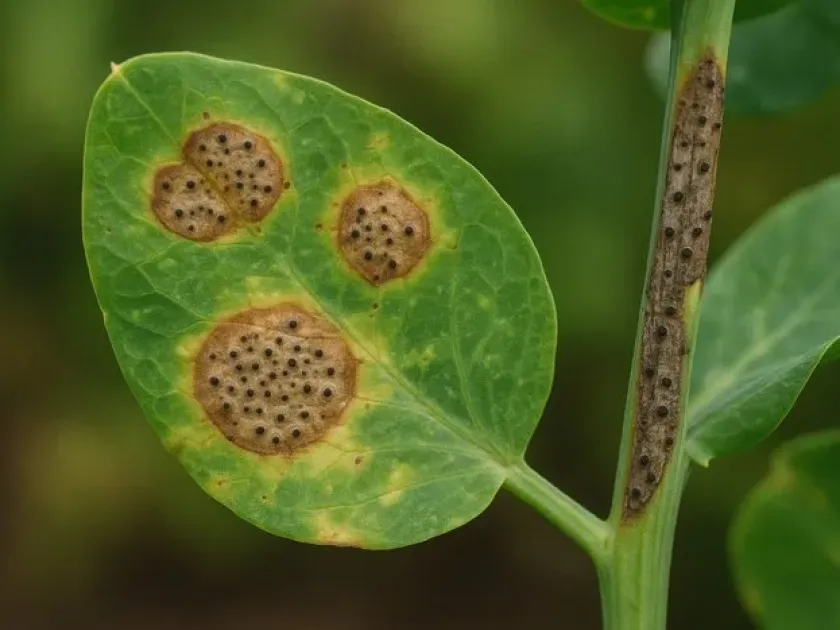
The initial signs of Ascochyta blight appear as small, gray-brown spots on leaves. As these lesions expand, they develop a distinct dark border, and the center eventually fades to a lighter, ash-gray color.
Stem lesions appear as elongated, brown, and often sunken patches. These wounds can eventually girdle the stem, causing the upper portion of the plant to wither and die, a condition often referred to as stem blight.
Pod symptoms are highly diagnostic, consisting of round or irregular spots with dark edges. Within these spots, tiny black specks, which are the pycnidia of the fungus, can be seen with the naked eye or a hand lens.
Infected seeds often show surface discoloration and deformities. When these seeds are planted, the fungus often emerges with the seedling, causing pre-emergence damping-off or lesions on the emerging hypocotyl.
In humid conditions, the lesions may display a fine gray fungal growth. This mass of conidia indicates that the fungus is actively sporulating and represents a high risk of spread to surrounding healthy vegetation.
Control measures
The primary control measure is the use of high-quality, certified disease-free seeds. Seed treatment with effective fungicides is essential to eliminate any surface-borne inoculum before sowing.
Implementing a rigorous crop rotation plan is vital for management. By alternating beans with non-host crops for at least three to four years, the build-up of the fungal population in the soil can be significantly reduced.
Sanitation practices, such as the removal or deep burial of crop debris after harvest, play a crucial role in reducing the primary inoculum source for the following season. This helps break the survival cycle of the pathogen.
Fungicide applications during the growing season serve as a secondary line of defense. Targeted spraying based on environmental monitoring and the appearance of early symptoms can effectively suppress the spread of the blight.
Selecting and planting resistant or tolerant bean cultivars is the most sustainable approach to controlling Ascochyta blight. Breeding programs focus on enhancing natural defense mechanisms to provide long-term protection.
Causes diseases · 1
Discussion
No discussions yet — be the first.