
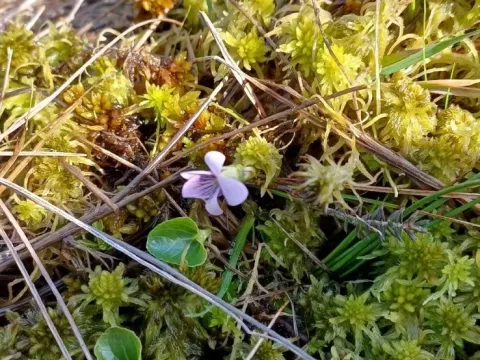
Marsh violet
Viola palustris
The marsh violet (Viola palustris) is a perennial herbaceous plant belonging to the Violaceae family. It is native to cool, temperate regions of the Northern Hemisphere, where it typically colonizes wetlands, marshes, and damp meadows.
What the section contains
Marsh violet
To cultivate this species successfully, it is essential to replicate its natural environment. The plant requires consistently moist, even waterlogged soil, making it an excellent candidate for bog gardens, pond edges, or damp woodland areas.
It thrives in acidic, peat-based soils that provide the necessary nutrients and moisture retention. While the marsh violet can tolerate full sun in cool climates, it generally prefers partial shade, which protects the foliage from heat stress.
Morphologically, the plant features a basal rosette of heart-shaped or kidney-shaped leaves on long petioles. It spreads via creeping rhizomes, forming dense mats that help stabilize the soil in riparian zones and humid garden beds.
The flowers are delicate, ranging in color from pale violet to white, typically emerging in spring. They are supported by slender peduncles that rise slightly above the foliage, creating a charming display in damp garden settings.
The marsh violet may be susceptible to fungal infections such as powdery mildew and Botrytis (gray mold). These conditions often arise in areas with poor air circulation, particularly during prolonged periods of high humidity and stagnant air.
Gastropod pests, specifically slugs and snails, are the most significant threat to the marsh violet. They are attracted to the succulent nature of the leaves and can cause extensive damage during damp, cool weather conditions.
Certain butterfly larvae, including those from the Fritillary family, may feed on the foliage. While usually not lethal to established plants, significant infestations can reduce the overall vigor and aesthetic appeal of the violet carpet.
Root rot is a potential concern if the soil becomes stagnant rather than just moist. Ensuring a slight movement of water, or periodic renewal of the substrate, helps maintain a healthy root zone and prevents the accumulation of harmful bacteria.
To keep plants healthy, gardeners should practice good sanitation by removing decaying plant matter. If chemical intervention is necessary, it is vital to choose products safe for use near water sources to protect local biodiversity.