
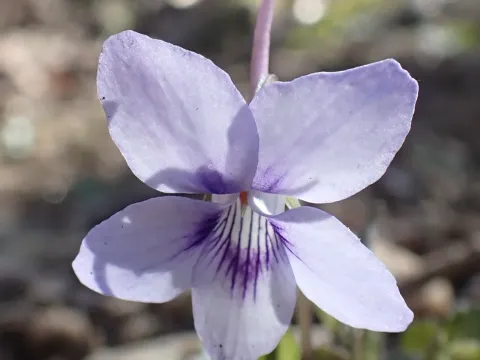
Long-spurred violet
Viola rostrata
The long-spurred violet (Viola rostrata) is a herbaceous perennial belonging to the Violaceae family. It is native to the woodlands of eastern North America, where it typically thrives in shady, moist environments enriched with decaying leaf litter.
What the section contains
Long-spurred violet
Botanically, the species is easily identified by its distinctive, slender spur that projects from the back of the flower, resembling a bird's beak. The leaves are generally heart-shaped and form attractive clumps that carpet the forest floor during the spring bloom cycle.
Successful cultivation of Viola rostrata requires an environment that mimics its natural habitat. It performs best in nutrient-rich, well-draining soils with a slightly acidic profile, avoiding waterlogged conditions that can cause the rhizomes to rot prematurely.
Regarding light requirements, this plant is a shade-loving species. It should be positioned in areas with dappled sunlight or deep shade, as direct exposure to harsh afternoon sun will scorch the foliage and reduce the vigor of the plant.
In terms of usage, the long-spurred violet is primarily used as an ornamental plant in woodland gardens, rockeries, and shady perennial borders. While not a commercial field crop, it is highly valued by horticulturists for its delicate beauty and ability to naturalize in appropriate settings.
Common plant diseases affecting this species include powdery mildew and leaf spot infections, which often occur when environmental conditions involve poor air circulation combined with high humidity levels.
Pests that frequently target the species include aphids, which suck sap from new growth, and various gastropods such as slugs and snails that can severely damage leaves during wet spring weather.