
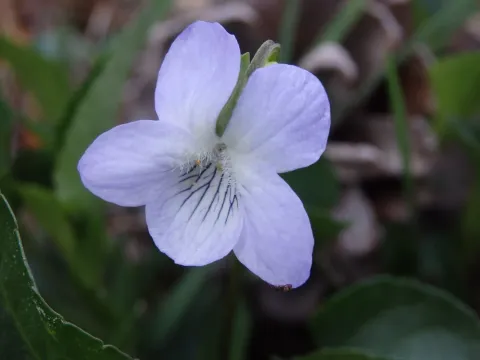
Pale heath violet
Viola lactea
The Pale heath violet (Viola lactea) belongs to the Violaceae family. It is a perennial herbaceous plant naturally found in heathlands, moist meadows, and open woodland edges across Europe.
What the section contains
Pale heath violet
This species thrives in acidic or neutral soils that are well-drained but maintain consistent moisture levels. It is highly sensitive to excessive nitrogen fertilizers and poorly aerated soil structures.
Climatic requirements involve moderate air humidity and stable temperature ranges. The plant is particularly adapted to Atlantic climates, where mild winters allow it to maintain its characteristic vegetative rosettes.
Botanically, the species is identified by its narrow, lanceolate leaves and delicate pale violet to whitish flowers with distinct dark veins. The flowering period generally occurs from late spring to early summer.
In terms of ecological significance, Viola lactea serves as an important indicator species for the health of heathland ecosystems, necessitating specific conservation efforts in its range.
The primary threats to the survival of the Pale heath violet include land drainage, agricultural intensification, and the destruction of its native heathland habitats.
Common pests include aphids and spider mites, which can cause significant damage to foliage during dry spells by depleting the plant's nutrient reserves.
Fungal infections, such as powdery mildew, often occur in suboptimal growing conditions where humidity is high and airflow is restricted around the leaves.
Competition from aggressive grasses and invasive shrub species can quickly outcompete the violet, especially in areas where traditional land management has been abandoned.
Seed predation by insects and small mammals can also negatively impact the reproductive success and population density of the plant in fragmented landscapes.