
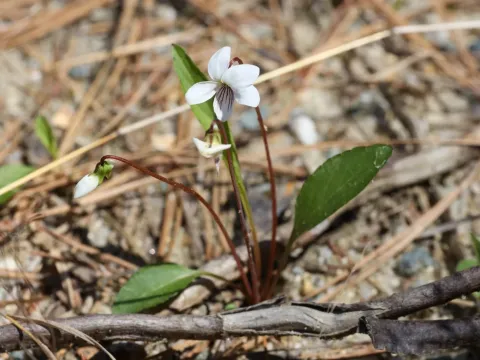
Lance-leaved violet
Viola lanceolata
Seeds of the lance-leaved violet should ideally be sown in late autumn to allow for natural cold stratification during the winter period.
What the section contains
Lance-leaved violet
If indoor sowing is preferred, seeds must undergo cold treatment in a refrigerator for at least four to six weeks to ensure successful germination.
Sowing should be done on the surface of a light, moist potting mix, as the seeds require sufficient light exposure to initiate the growth process.
Maintaining a consistent moisture level is crucial during the germination phase, which can take several weeks depending on environmental stability.
Once seedlings have developed robust foliage, they can be transplanted into prepared garden beds with spacing that prevents overcrowding.
Viola lanceolata is a member of the Violaceae family, native to the wetlands, meadows, and marshes of North America.
This species is uniquely adapted to damp environments and requires consistent moisture in the root zone to thrive throughout the growing season.
The plant performs best in acidic soils that are rich in organic matter, imitating its natural habitat in flood-prone or swampy terrains.
While the species prefers full sun, it can tolerate partial shade, provided the humidity remains high enough to support its leaf metabolism.
Successful management requires avoiding soil compaction and ensuring that the substrate stays loose enough for healthy root respiration.
Fungal diseases, specifically powdery mildew, often occur in crowded plantings where air circulation is restricted and humidity remains stagnant.
Root rot is a significant risk if the soil becomes waterlogged without adequate drainage, which can weaken the entire plant structure quickly.
Slugs and snails are the most common pests, as they are attracted to the succulent, lance-shaped leaves, especially during wet summer months.
Aphids can cause damage to the developing flower buds, necessitating periodic monitoring and the use of targeted control measures when needed.
Implementing proper hygiene practices, such as removing fallen debris, significantly reduces the pressure from pests and soil-borne pathogens.