
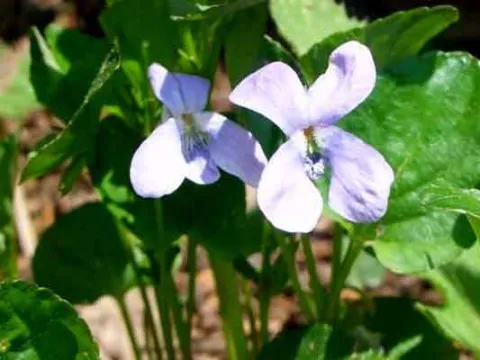
Muehldorf violet
Viola muehldorfii
The Muehldorf violet (Viola muehldorfii) is a perennial herbaceous plant belonging to the Violaceae family. This species originates from specific mountainous regions, which dictates its adaptation to temperate and cool climatic conditions with sufficient ambient humidity.
What the section contains
Muehldorf violet
Cultivation requires well-drained, moderately fertile soils with a neutral or slightly acidic pH level. To ensure optimal growth, the soil structure must allow for adequate oxygen circulation to the roots while maintaining consistent moisture without waterlogging.
The plant thrives best in locations with filtered or partial sunlight. Exposure to intense, direct midday sun can result in leaf scorching and rapid moisture loss, significantly reducing the plant's aesthetic value and overall vigor during the growing season.
Botanically, the species is characterized by a basal rosette of leaves and long peduncles bearing zygomorphic flowers. The shallow root system requires careful surface cultivation and the application of mulch to retain soil moisture and regulate soil temperature.
Economically, the Muehldorf violet is primarily valued as an ornamental plant. It is frequently used in landscape architecture, rock gardens, and shaded borders, where its compact size and flowering habit provide high ornamental quality with minimal maintenance.
The primary pathological threats to this species include fungal diseases such as powdery mildew and various leaf spot pathogens, which typically manifest under conditions of poor ventilation and excessive humidity.
Root rot represents a severe threat when soil drainage is insufficient. Over-irrigation frequently leads to the rapid onset of decay at the root crown, often resulting in the irreversible decline of the plant if not addressed promptly.
Pests that commonly infest this crop include spider mites, aphids, and leaf-rolling caterpillars. These pests feed on succulent plant tissues, causing stunted growth, distortion of leaves, and a overall decrease in flower production.
Integrated pest management strategies are essential for maintaining plant health. This includes the regular removal of dead foliage, ensuring proper spacing between individuals to encourage air circulation, and early detection of pest activity.
Control measures should favor biological interventions over broad-spectrum chemical pesticides, as the delicate tissues of the violet are susceptible to chemical phytotoxicity, which can be just as damaging as the initial pest infestation.