
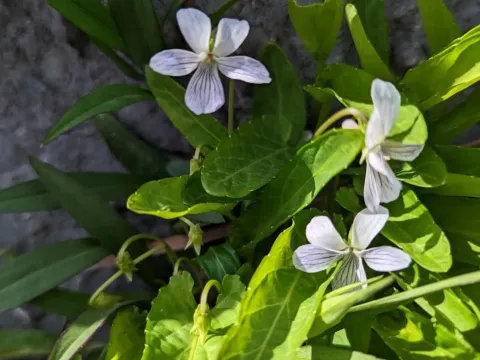
Patrin's violet
Viola patrinii
Patrin's violet (Viola patrinii) belongs to the Violaceae family. It is a perennial herbaceous plant distinguished by its distinct arrow-shaped or triangular leaves gathered in a basal rosette.
What the section contains
Patrin's violet
The native range of this species covers East Asia, extending across regions of the Russian Far East, China, Japan, and Korea. In the wild, it typically thrives in meadows, forest edges, and along moist stream banks.
For successful cultivation, the plant requires fertile, well-drained soil that maintains consistent moisture levels. The pH should be slightly acidic to neutral to ensure optimal nutrient uptake for the root system.
Regarding climatic conditions, Patrin's violet prefers partial shade. Direct, intense sunlight can stress the plant and cause leaf scorch, particularly in regions with hot summer temperatures.
Standard agrotechnical practices include regular irrigation during dry spells and the application of organic mulch. Mulching helps retain soil moisture and stabilizes the temperature of the root zone, promoting better plant development.
The primary health threats to Patrin's violet include fungal diseases like powdery mildew, which often thrives in stagnant, humid environments. Such conditions necessitate improved airflow and proper plant spacing.
Common pests such as aphids can cause significant damage by feeding on the sap of young buds and tender leaves. This infestation often weakens the plant and stunts its overall growth and floral output.
Gastropods, including slugs and snails, are particularly troublesome for this species in damp gardens. They feed on the succulent leaves, often requiring manual removal or the use of eco-friendly repellents.
Regular monitoring of the plants allows for early detection of potential threats. Keeping the garden bed clear of debris and excessive weeds minimizes the habitats for many common pests and pathogen vectors.
In severe infestation cases, applying specific fungicides or insecticides is recommended. However, it is always preferable to focus on cultural practices like crop rotation and hygiene to prevent initial outbreaks.