
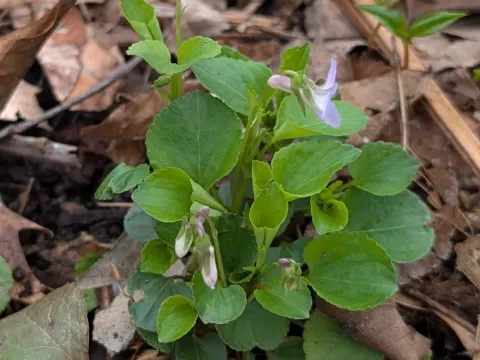
Labrador violet
Viola labradorica
Sowing of Labrador violet seeds is ideally performed in late autumn or early winter directly into the prepared garden soil. This exposure to freezing temperatures, known as cold stratification, is essential to break seed dormancy and ensure uniform germination in spring.
What the section contains
Labrador violet
If opting for spring sowing, seeds must undergo artificial stratification by placing them in a refrigerator at temperatures between 2°C and 4°C for at least six to eight weeks. Failure to provide this cold treatment will result in very poor germination rates.
Seeds should be sown on the soil surface or covered with a very fine layer of vermiculite, as they require a small amount of light to germinate. The planting medium should remain consistently moist but not waterlogged during the germination phase.
Once seedlings have developed at least two sets of true leaves, they can be carefully pricked out and transplanted into individual pots or spaced 15–20 cm apart in a nursery bed. This allows for stronger root development before they are placed in their final garden location.
Vegetative propagation is also highly effective for this species. By dividing established clumps in early spring or autumn, gardeners can quickly produce multiple new plants that retain the characteristics of the parent, including the distinctive dark leaf coloration.
Labrador violet (Viola labradorica) is a hardy herbaceous perennial belonging to the Violaceae family. It is native to North America, particularly northern regions, which dictates its preference for cool, moist environmental conditions.
This species thrives in partially shaded environments, making it an excellent candidate for woodland gardens or north-facing borders. While it can tolerate more sun in cooler northern climates, it requires protection from intense heat and afternoon sun in warmer regions.
The ideal soil is rich in organic matter, slightly acidic, and well-draining. Incorporating leaf mold or well-rotted compost during planting significantly improves soil structure and water retention, which are crucial for the plant's long-term health.
The plant is highly resilient and cold-hardy, capable of surviving harsh winters with minimal protection. It forms a low-growing, spreading mat, which makes it an effective ground cover that helps suppress weeds while maintaining soil moisture.
Regular maintenance is minimal, primarily involving supplemental watering during periods of drought. Ensuring the plant does not dry out completely is important, as the leaves can lose their vibrant, deep-purple hue if the soil becomes overly desiccated.
Slugs and snails are the most significant pests for Viola labradorica. These mollusks are particularly active during damp weather and can cause substantial damage to the plant's delicate foliage, sometimes consuming large portions of the leaves overnight.
Powdery mildew is the most common fungal disease, typically occurring when plants are grown in crowded conditions with poor air circulation. Improving spacing and ensuring adequate airflow can prevent the spread of this unsightly white coating on the leaves.
Root rot can occur if the plant is situated in heavy, waterlogged soil. Proper drainage is the most effective preventative measure; if the soil is clay-heavy, amending it with coarse sand or fine grit can mitigate the risk of root-related complications.
Aphids can occasionally infest young flower buds in the spring. If an infestation is detected, it is generally sufficient to spray the plants with a gentle stream of water or a mild insecticidal soap solution to remove the pests.
To keep a colony of Labrador violet healthy and vigorous, consider thinning out the plants every few years. This practice reduces competition for nutrients and limits the build-up of potential pathogens within the dense, spreading foliage mat.