
Macloskey's violet
Viola macloskeyi
Macloskey's violet (Viola macloskeyi), often referred to as the smooth white violet, is a perennial herbaceous plant within the Violaceae family. Native to North America, it thrives in cool, moist habitats such as bogs, meadows, and shaded stream banks where moisture is consistent throughout the year.
What the section contains
Macloskey's violet
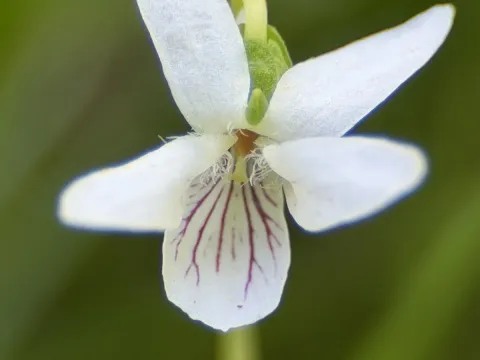
The plant is distinguished by its small, pristine white flowers, often featuring delicate purple nectar guides on the petals. Its leaves are simple and rounded, forming a basal rosette that remains lush and green, contributing to its ornamental value as a groundcover.
Regarding cultural requirements, this species demands a damp, humus-rich soil environment with a slightly acidic pH. It performs best in partial to full shade, as the foliage is prone to scorching under intense direct solar radiation, especially in warmer temperate climates.
For successful cultivation, gardeners must ensure a consistent moisture supply. Unlike many other violets, Viola macloskeyi does not tolerate prolonged drought; even short periods of dryness can significantly set back the plant's growth and reduce the number of blossoms.
In landscaping, it serves primarily as a decorative plant for bog gardens, woodland plantings, or along the moist edges of pond features. It complements other moisture-loving flora and effectively suppresses weeds through its moderate but steady rhizomatous spread.
The plant is susceptible to common fungal pathogens, particularly when air circulation is poor or humidity is excessive in stagnant conditions. Typical pests include slugs and snails, which are attracted to the succulent-like foliage, particularly in early spring when the new growth emerges.