
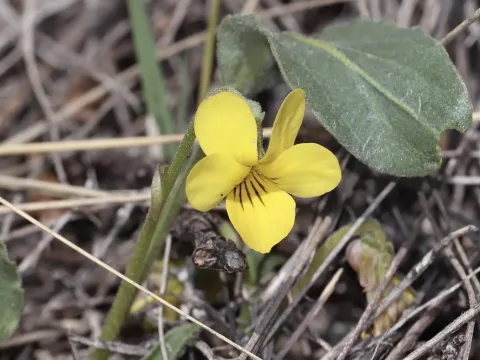
Nuttall's violet
Viola nuttallii
Nuttall's violet (Viola nuttallii) is a perennial herbaceous plant belonging to the Violaceae family. It is native to the vast prairie regions of North America, where it thrives in open, sun-drenched grasslands and rocky slopes.
What the section contains
Nuttall's violet
Botanically, it is characterized by its lance-shaped leaves and distinct bright yellow flowers with dark veining. The plant typically stays low to the ground, growing in small, dense clumps that adapt well to the harsh winds of its natural habitat.
Climatic requirements focus on a need for high light intensity and distinct seasonal cycles. The plant is well-adapted to the cold winters and warm, dry springs characteristic of the American Midwest and Western provinces.
Soil conditions should prioritize excellent drainage. Viola nuttallii performs best in sandy or gravelly loam soils with a neutral pH level. It does not tolerate waterlogged soil, which causes rapid deterioration of the crown and roots.
Agricultural use of this species is largely ecological, focusing on prairie restoration projects and landscaping that requires low-maintenance, native species. It contributes significantly to local biodiversity by providing early nectar for native pollinators.
Powdery mildew is the most common fungal issue for Nuttall's violet, particularly in humid and stagnant air conditions. Proper spacing and airflow are essential to keep the foliage healthy and free of white mycelial growth.
Aphids often target the tender buds and young leaves during the early growing season. These pests can be managed by biological controls or insecticidal soaps if their population reaches damaging thresholds.
Root rot is a major threat linked to poor irrigation management. When the soil remains consistently moist, the delicate root system becomes susceptible to various soil-borne pathogens, leading to plant collapse.
Spider mites may become problematic during periods of extreme heat and drought. These small pests cause yellowing and stippling on the leaves, eventually reducing the overall vigor of the perennial clump.
Weed competition is a significant threat during the establishment phase. Since Viola nuttallii is a relatively slow-growing plant, regular hand weeding is required to ensure it is not choked out by more aggressive prairie grasses.