
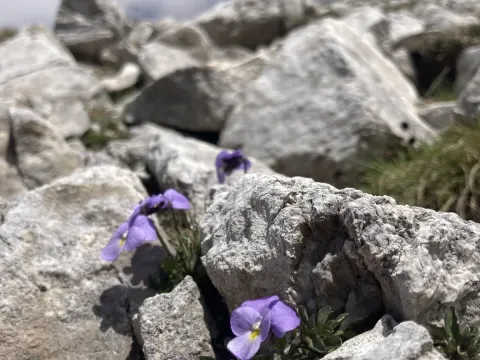
Grisebach's violet
Viola grisebachiana
Viola grisebachiana is a perennial herb belonging to the Violaceae family. This species is native to the mountain ranges of the Balkan Peninsula, where it typically thrives in rocky subalpine environments.
What the section contains
Grisebach's violet
The plant is characterized by its low-growing, mat-forming habit, which makes it highly effective for alpine gardens. It possesses small, resilient leaves and distinctive flowers that adapt well to the harsh climatic conditions of its origin.
For successful cultivation, this species requires a location with excellent drainage. While it thrives in full sun, partial shade is recommended in regions with extremely hot summers to prevent the foliage from scorching.
The ideal growing medium should mimic its natural rocky habitat, consisting of a gritty, mineral-rich soil mixture. It is essential to avoid overly fertile or compacted soils, as these can promote excessive vegetative growth at the expense of floral display.
In landscape design, this violet is utilized as a ground cover or as a centerpiece for rockeries and crevice gardens. Its ability to tolerate cooler climates makes it a reliable choice for perennial garden borders in temperate zones.
The primary threats to Viola grisebachiana are fungal diseases associated with poor ventilation and high humidity. Leaf spot and mildew can manifest if the foliage remains wet for extended periods during stagnant weather.
Root rot is the most common cause of plant failure, typically occurring in heavy soils that do not allow for adequate water drainage. Ensuring the crown of the plant is kept dry and well-aerated is critical for health.
Gastropods, such as slugs and snails, represent the main pest threat to this species. They are particularly active during damp weather and can cause significant cosmetic and physical damage to the leaves and developing buds.
Aphids can occasionally cluster on the flower stalks, causing stunted growth and distorted blooms. Early detection and the use of insecticidal soaps are standard methods to control these infestations effectively.
Maintaining the health of these plants requires minimal intervention if the initial site preparation is performed correctly. A well-drained, sunny position with adequate airflow will drastically reduce the susceptibility to both pests and pathogens.