
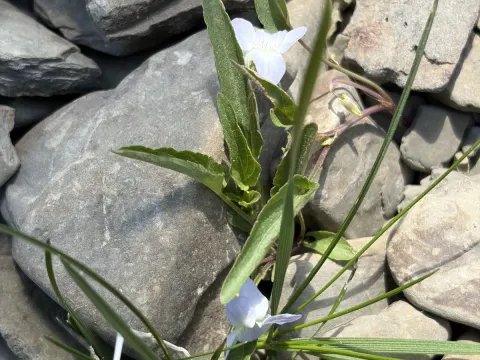
Fen violet
Viola stagnina
The Fen violet (Viola stagnina) is a member of the Violaceae family. It is a perennial herbaceous plant that thrives specifically in wet, marshy habitats, distinguishing it from typical garden violet varieties.
What the section contains
Fen violet
Botanically, this species is defined by its creeping rhizome system, which allows it to spread across saturated soil substrates. Its leaves are generally lanceolate, and the flowers possess a distinct pale blue or whitish coloration.
Regarding habitat requirements, the Fen violet is strictly bound to areas with high soil moisture, such as fens, marshes, and the margins of ponds. It favors neutral to slightly acidic organic soils that remain waterlogged throughout the growing season.
The species requires a climate that ensures stable moisture levels. It does not tolerate prolonged drought, which can lead to the rapid death of vegetative parts. The plant is highly sensitive to changes in the water table and requires specific hydrological conditions.
In terms of agricultural or economic use, the Fen violet is not a crop plant. Because it is often classified as a threatened or protected species in many parts of its range, it is primarily managed within the scope of conservation biology rather than commercial cultivation.
The primary threat to the Fen violet is the drainage of wetlands for agricultural expansion. Land reclamation projects significantly lower groundwater levels, effectively eliminating the specific environmental niche required for the plant's survival.
Pathogenic fungi are a significant threat to the health of these plants, particularly when stagnant water conditions are combined with excessive nutrient loading from fertilizer runoff in adjacent agricultural areas. This can lead to root and leaf diseases.
Herbivorous insects, such as larvae of certain fritillary butterflies, feed on the foliage of Viola species. While this is a natural interaction, it can become a stressor when the population density of the violet is already low due to habitat fragmentation.
Invasive plant species pose a major competitive risk. As wetlands undergo eutrophication, faster-growing, more aggressive species often displace the Fen violet by outcompeting it for sunlight and space within the canopy layer.
Mitigation efforts for these threats center on habitat preservation. Protecting the hydrological integrity of fen ecosystems is the single most effective way to prevent the decline of this rare botanical species and maintain its population stability.