
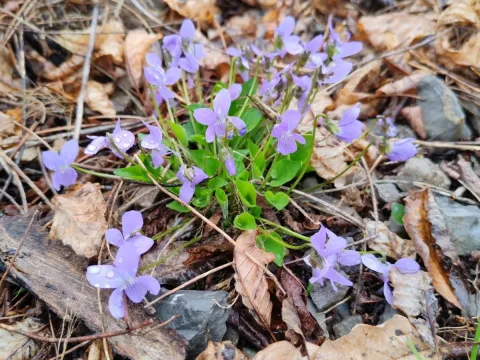
Hill violet
Viola collina
The Hill violet (Viola collina) is a perennial herbaceous plant belonging to the Violaceae family. It is typically found in temperate forest zones, thriving in sheltered, semi-shaded environments with well-drained, nutrient-rich soil conditions.
What the section contains
Hill violet
Botanically, the plant is characterized by a lack of an aerial stem; its leaves and flowers arise directly from the rhizomatous rootstock. This compact growth habit helps the plant conserve moisture and energy throughout the growing season.
Regarding climatic needs, the species prefers regions with distinct seasonal changes, showing high cold resistance during winter months. It performs best in soils with a slightly acidic to neutral pH, which facilitates optimal nutrient uptake for the plant's biological processes.
Agricultural management of Viola collina requires minimal intervention, primarily focusing on maintaining soil aeration and moisture balance. While it is hardy, providing organic mulch can help stabilize soil temperatures and improve the overall development of the root system.
The economic value of this crop lies in its potential for medicinal applications and its aesthetic utility in landscaping. Its ability to colonize shaded areas makes it a useful species for biodiversity maintenance and natural ground cover projects.
The most common disease affecting Hill violet is powdery mildew, which appears as a white coating on the leaves. This is usually triggered by high humidity and poor air circulation within the plant canopy.
Insect pests, such as aphids and spider mites, are frequent visitors that can weaken the plant by feeding on its foliage. Regular monitoring is essential to prevent significant infestations during the active growth period.
Root rot caused by fungal pathogens is a significant threat when soil drainage is insufficient. Ensuring that the planting site does not become waterlogged is the primary defense strategy for any grower.
Slugs and snails often graze on the tender parts of the plant, especially during rainy spells. Mechanical barriers or eco-friendly deterrents are recommended to protect the crop from significant cosmetic or biological damage.
If chemical intervention becomes necessary, it is vital to select products specifically approved for the target species to avoid disrupting the ecological balance of the surrounding microhabitat.