
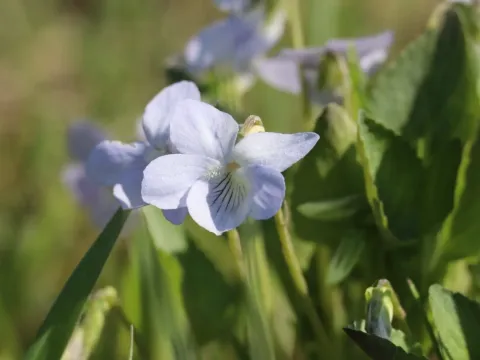
Heath dog-violet
Viola canina
The Heath dog-violet (Viola canina) is a perennial herbaceous plant belonging to the Violaceae family. It is native to Europe and parts of Asia, frequently found in habitats such as heaths, meadows, and forest clearings. It is a hardy species adapted to diverse environmental conditions.
What the section contains
Heath dog-violet
Morphologically, the plant lacks a basal rosette of leaves, which distinguishes it from many other violet species. Its stems are ascending and branching, typically reaching a height of 10–30 centimeters. The flowers are pale blue or violet and lack the characteristic scent of sweet violets.
Regarding soil requirements, the species thrives in well-drained, acidic to neutral soils. It shows a high tolerance for nutrient-poor substrates, making it a common sight on dunes and dry grassland. It requires adequate sunlight to ensure optimal flowering and reproductive success.
The life cycle of this plant is well-integrated into the ecosystem of open grasslands. It reproduces through seeds and via its short, creeping rhizome. The plant is considered a significant part of the natural flora, providing essential ecological services within its native range.
Although not a primary crop in traditional agriculture, it is studied for its adaptability and role in biodiversity conservation. Its presence is often used as an indicator of healthy, diverse grassland ecosystems that have not been overly transformed by intensive chemical fertilization.
The primary diseases affecting Viola canina include powdery mildew, especially in sites with poor air circulation or excessive humidity. This fungal infection leads to stunted growth and reduced seed production, which can threaten the local population of the violet.
Pest pressure is mostly limited to specialist herbivores, particularly butterfly larvae of the Fritillary family (Argynnis). These insects rely heavily on the leaves of the violet during their development. Aphids may also infest the plant during the early growth season, causing mild stress.