
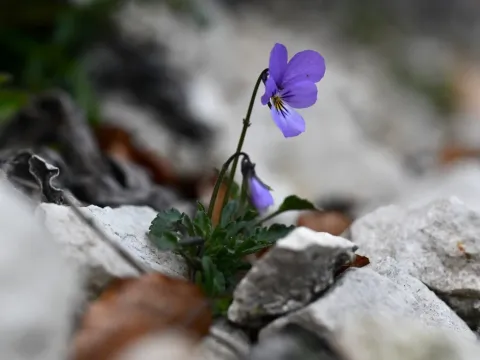
Hairy violet
Viola hispida
The hairy violet (Viola hispida) is a perennial herbaceous plant belonging to the Violaceae family. It is known for its distinct bristly pubescence covering the stems and leaves, an evolutionary trait that helps the plant survive in specialized microclimates.
What the section contains
Hairy violet
Regarding soil requirements, the species has a strong preference for calcareous substrates. In an agricultural or horticultural setting, the soil must be well-draining, slightly alkaline, and rich in calcium to mirror its natural habitat's conditions.
The plant thrives in temperate climates and is highly sensitive to waterlogging. Good drainage is the most critical factor in successful cultivation; otherwise, the root system is prone to rapid decay in heavy or compacted soils.
Light requirements for Viola hispida involve bright but indirect sunlight. In many regions, partial shade is ideal, as direct exposure to strong afternoon sun can cause dehydration and necrosis of the sensitive, hairy foliage.
Nutrient management should be handled with care. This plant does not require high levels of nitrogen, as it can cause excessive vegetative growth that weakens the plant's natural structure. Balanced, low-concentration mineral fertilizers are usually sufficient.
The primary threats to the hairy violet are fungal pathogens that flourish in humid or stagnating conditions. Gray mold and root rot are significant risks, especially during rainy seasons or when irrigation cycles are not strictly controlled.
Pests such as spider mites and aphids can become a major concern, particularly during dry spells. These pests colonize the undersides of the leaves, drawing sap and weakening the plant, which may lead to stunted growth or total decline.
Gastropods, including slugs and snails, are frequent visitors that find the fleshy parts of the plant quite palatable. Using physical barriers, such as crushed stone or copper tape, is a standard non-chemical practice to mitigate this threat.
Proper air circulation is the best preventative measure against most biotic threats. Planting in open, well-ventilated areas ensures that foliage dries quickly after dew or rain, preventing the onset of bacterial or fungal infections.
Regular monitoring of the crown and root neck is essential for identifying early signs of distress. If disease symptoms appear, removing the affected plant or applying targeted bio-fungicides is necessary to protect the remaining collection.