
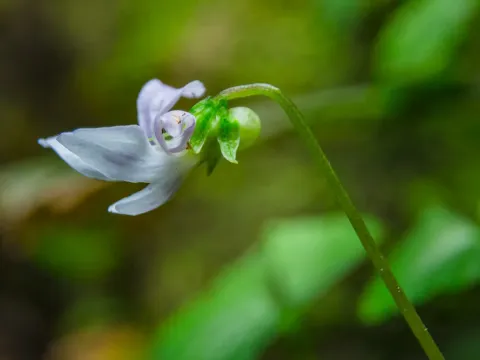
Curved-stem violet
Viola arcuata
The curved-stem violet (Viola arcuata) belongs to the Violaceae family. It is a perennial herbaceous plant that naturally thrives in moist forest habitats, near stream banks, and in shaded lowlands.
What the section contains
Curved-stem violet
The crop requires specific conditions for active growth: it needs consistent high humidity of both soil and air. The plant does not tolerate direct sunlight or intense overheating, so it is typically placed in partial shade for both ornamental and agricultural purposes.
Optimal soils for this species are light, organic-rich substrates with a neutral or slightly acidic pH level. It is crucial to provide proper drainage to prevent water stagnation at the root zone, despite the plant's natural preference for moisture.
Climatic requirements for Viola arcuata center on moderate temperatures. It is sensitive to sudden daily fluctuations and requires areas sheltered from strong winds, as the slender flower stalks can be damaged under harsh weather conditions.
In terms of economic use, this species is valuable as an ornamental ground cover and as a potential source of botanical material. A key biological trait of this species is its ability to spread vigorously via underground stolons, allowing it to form dense, lush patches quickly.
The main threats to the culture are fungal diseases, such as powdery mildew and various leaf spots, which proliferate under conditions of high humidity and poor air circulation within the plant canopy.
Among the pests, slugs and snails are the most frequent, causing significant damage to the delicate leaf blades during wet weather periods. Spider mites may also occur if the humidity levels drop significantly.
Disease prevention is based on maintaining proper plant spacing to ensure sufficient airflow. When necessary, broad-spectrum fungicides are applied to protect the plant health.
Pest management includes both manual removal of mollusks and the application of specialized biological agents. It is essential to keep the area free of weeds, which can act as reservoirs for various pathogens.
Continuous agronomical monitoring allows for the early detection of disease outbreaks and the immediate containment of infections, thereby preserving the aesthetic value and vitality of the Viola arcuata crop.