
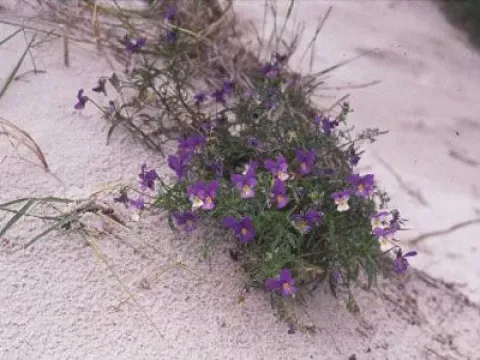
Coastal Violet
Viola littoralis
Coastal Violet (Viola littoralis) belongs to the family Violaceae. It is a perennial herbaceous plant native to coastal environments and sand dune ecosystems, where it thrives in specialized niches.
What the section contains
Coastal Violet
The plant exhibits specific botanical characteristics, including a robust root system capable of stabilizing loose sandy soils. Its leaf structure is adapted to minimize water loss under conditions of high solar radiation.
Requirements for soil include excellent drainage and low fertility. The species is highly sensitive to waterlogging and nutrient-rich substrates, which can hinder its normal development and overall plant health.
The climate requirements for this species are specific to moderate coastal regions. It prefers environments where atmospheric humidity remains stable, preventing the plant from experiencing extreme physiological drought.
In terms of agricultural and research potential, the Coastal Violet serves as a valuable genetic resource for studying salt tolerance and adaptation to poor, sandy soils in harsh environments.
The primary threats to Viola littoralis include habitat destruction due to coastal erosion and human development, which directly disrupts the fragile balance of dune ecosystems.
In cultivation, excessive moisture is the most common cause of root rot, often fatal to this species. Controlled irrigation is mandatory to simulate the natural drainage found in sand dunes.
Pests such as spider mites can impact the foliage health during hot and dry spells. Effective management requires constant monitoring of the leaf surface and immediate non-chemical intervention.
Invasive weed species pose a significant threat by competing for sunlight and space, effectively squeezing the slow-growing Coastal Violet out of its native distribution areas.
Anthropogenic pollution, including fertilizer runoff into coastal zones, significantly alters the soil chemistry, making it toxic for a species evolved for nutrient-poor, pristine habitats.