
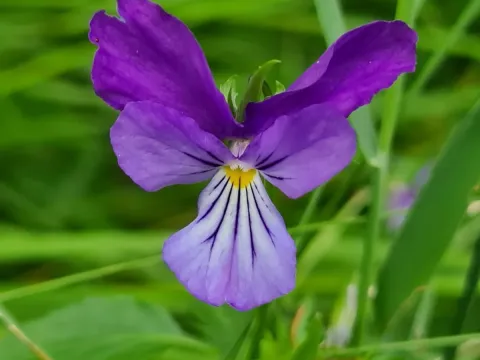
Dacian violet
Viola dacica
Dacian violet (Viola dacica) is a herbaceous perennial plant belonging to the Violaceae family. It is native to the mountain ranges of Central and Southeastern Europe, particularly well-adapted to high-altitude meadows and rocky terrain.
What the section contains
Dacian violet
For successful cultivation, this species requires well-drained, humus-rich soil with a neutral to slightly acidic pH. Good aeration of the substrate is critical, as the roots are sensitive to waterlogging, which often leads to decay.
The plant thrives in cool, temperate climates, favoring sunny to semi-shaded locations. When grown in lower altitudes, it is essential to prevent soil overheating by applying a layer of organic mulch around the plant base.
Botanically, Viola dacica features a compact rosette of leaves and striking purple-to-blue flowers. The plant's architecture makes it an excellent choice for rock gardens, mimicking its natural habitat in the mountain zones.
Its primary use is ornamental, specifically for specialized alpine gardens and rockeries. The plant's hardiness makes it a valuable asset for gardeners looking to introduce native European flora into their outdoor collections.
Powdery mildew is a common fungal threat, typically triggered by high humidity and poor air circulation. It manifests as a dusty white layer on the foliage, eventually stunting plant growth.
Root rot is the most dangerous condition for Dacian violet, often caused by heavy soils or excessive irrigation. It is essential to ensure a robust drainage system to maintain plant health throughout the season.
Aphids represent a frequent pest challenge, feeding on the tender sap of new leaves and stems. Management involves either natural predatory insects or appropriate systemic insecticides.
Spider mites can become a significant issue during prolonged periods of drought and high temperatures. Monitoring the undersides of leaves is necessary to catch infestations before they spread.
Slugs and snails can cause cosmetic damage to the petals and foliage, especially in rainy springs. Protective measures include using biological control methods or barrier traps around the perimeter of the planting area.