
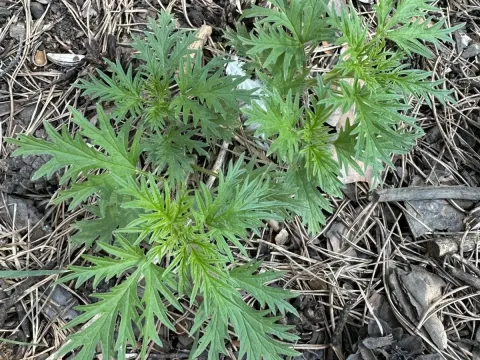
Hemp-leaved nettle
Urtica cannabina
The hemp-leaved nettle (Urtica cannabina) is a perennial plant of the Urticaceae family. It is known for its vigorous growth pattern and deep, rhizomatous root system, which allows it to thrive in diverse environments.
What the section contains
Hemp-leaved nettle
Seeding is best performed in early spring as soon as the soil is workable, or in late autumn for natural stratification. Seeds should be sown at a shallow depth of 1-2 centimeters due to their small size and sensitivity to burial.
Effective seedbed preparation is critical. The soil should be well-tilled to eliminate perennial weeds, as the crop can be sensitive to early-stage competition while establishing its primary root structure.
For commercial production, a row spacing of 45-60 centimeters is recommended. This setup facilitates mechanical weeding and ensures sufficient airflow, which is crucial for reducing humidity-related diseases.
Planting density should be calculated based on the intended use: fiber production benefits from higher density to encourage tall, straight stems, whereas forage production tolerates wider spacing for easier harvesting.
This species is highly adaptable but shows a preference for deep, fertile loamy soils. It thrives in nitrogen-rich environments, making it an ideal candidate for lands where natural nitrogen availability is high.
Climatically, it is a hardy crop, well-suited to temperate regions with distinct winter seasons. It is resistant to cold and can recover rapidly from frost once the spring growing season begins.
Soil pH should ideally be neutral or slightly alkaline. While it tolerates various soil conditions, it significantly underperforms in acidic or waterlogged soils, which can cause root decay.
Sunlight is essential for maximum yield. While the hemp-leaved nettle is tolerant of partial shade, full exposure to sunlight maximizes the production of biomass and the quality of the fiber.
Consistent moisture is required during the vegetative growth phase. Although the plant is somewhat drought-tolerant once established, irrigation is recommended during dry spells to maintain yield potential.
Yield capacity of Urtica cannabina is impressive when cultivated under optimal conditions. Biomass production can reach high levels per hectare, especially when intensive fertilization practices are applied.
The fiber extracted from this nettle is remarkably similar to industrial hemp in its tensile strength and utility. It serves as a sustainable, eco-friendly alternative for the textile and pulp industries.
To maximize the harvest, split-cropping is often used. Harvesting the greenery at different stages of maturity allows producers to capture distinct chemical profiles for either medicinal or industrial use.
Regular fertilization, particularly with nitrogen-based amendments, directly correlates with higher biomass accumulation. Proper management can extend the productive life of a stand for several years.
Seed yields are also significant, as the plant produces an abundance of small achenes. Proper handling during the threshing process is required to ensure clean seed collection for further propagation.
The hemp-leaved nettle is remarkably resilient. Its specialized stinging hairs and chemical profile make it naturally resistant to many common agricultural pests that plague less robust crops.
Powdery mildew represents the most likely threat, particularly in areas with poor ventilation or consistently high humidity. Management involves thinning rows and ensuring optimal plant spacing.
Occasional infestations of leaf-eating insects may occur during periods of low vigor. However, these are typically self-limiting and rarely require chemical intervention in a well-managed farm setting.
Root-related diseases are minimal, provided the soil drainage is adequate. Avoiding stagnant water is the single most important factor in maintaining a healthy, disease-free plantation.
- Regular field scouting.
- Strategic nutrient management.
- Adequate weed control in the first year.
Harvest timing depends on the specific end-product. For fiber, the stems should be cut at the onset of flowering when fiber quality and elasticity are at their theoretical maximum.
For forage or biomass, harvest should occur during the vegetative or early budding phase. At this stage, the leaves are most nutrient-dense and the stems remain soft and digestible.
Mechanical harvesting is common, using tractor-mounted mowers. When fiber is the goal, the stems are often left in the field for a brief retting process to loosen the bark from the woody core.
For large-scale operations, specialized harvesters that combine cutting and baling are used to streamline logistics and reduce manual labor costs associated with crop gathering.
Post-harvest handling is straightforward, but it is important to store the dried material in a well-ventilated location to prevent mold and maintain the structural integrity of the fibers.