
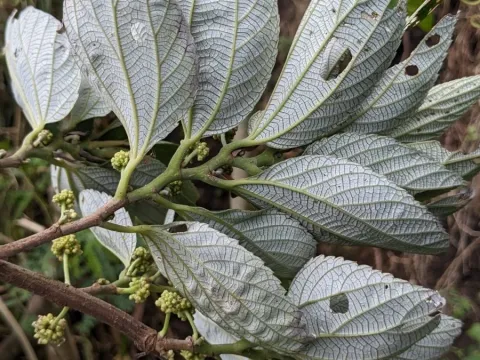
Leucosyke
Leucosyke
Leucosyke is a genus of shrubs and small trees belonging to the Urticaceae (nettle) family. These plants are native to tropical regions, predominantly found in the forest understories of Southeast Asia.
What the section contains

Leucosyke
The climate requirements for Leucosyke are strictly tropical, necessitating consistent high temperatures and significant humidity. The plant does not possess mechanisms to survive frost or arid conditions, making it unsuitable for temperate agriculture.
Optimal soil conditions include fertile, well-draining substrates rich in decomposed organic matter. Water management is essential, as the roots require consistent moisture but are highly susceptible to rot in waterlogged conditions.
Leucosyke is recognized for its fiber potential. Its stems contain high-quality bast fibers that are traditionally harvested for cordage, weaving, and textile production, serving as a key non-timber forest product.
As part of the Urticaceae family, the plant possesses specific structural traits, such as distinct leaf venation and a modular growth habit. Understanding these botanical characteristics is vital for identifying and propagating the species correctly.
The harvest of Leucosyke involves the selective cutting of stems followed by the meticulous extraction of bark fibers. This operation is traditionally performed by hand to ensure the preservation of the fiber length and tensile strength.
Post-harvest processing requires immediate attention to prevent degradation of the raw material. The bark is typically stripped from the woody core and then subjected to washing processes to remove excess plant tissues.
Drying is a critical stage in the production cycle. It must be conducted in shaded, well-ventilated areas to prevent UV-induced damage to the fibers, which can compromise the quality of the end-use products.
Sustainability in harvesting is managed through rotational cutting practices. By allowing the root system to remain intact, the plant is encouraged to sprout new shoots, thereby ensuring a continuous supply of biomass.
The final product is usually sorted based on fiber fineness and length. These fibers are then bundled and stored in dry conditions, ready for use in various local crafts ranging from fishing nets to artisanal home goods.