
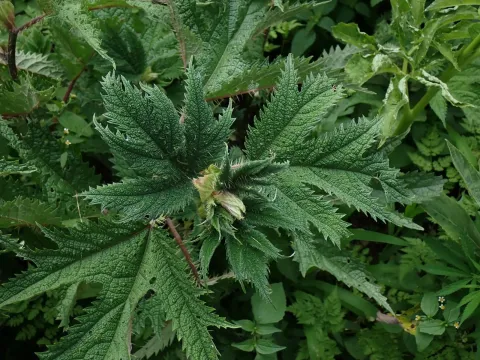
Girardinia
Girardinia
Girardinia is a perennial herbaceous plant belonging to the Urticaceae family. Recognized for its exceptionally strong bast fiber, it is cultivated in various regions as a valuable industrial crop.
What the section contains


Girardinia
Sowing typically begins in the spring once the soil has warmed sufficiently. Ideally, planting should occur between late April and May to ensure the plant has a long growing season to establish its root system.
The crop exhibits vigorous growth during the early stages. For fiber production, high-density planting is standard practice; this encourages the development of long, straight stems with minimal side branching, which is essential for high-quality fiber.
Seed preparation is crucial for success. Many producers use stratification or pre-soaking techniques to ensure uniform germination across the field, which is vital for the uniform growth of the fiber crop.
Proper weed management is essential during the initial weeks after emergence. Once the crop reaches a certain height and canopy density, it creates enough shade to effectively suppress most competing weeds.
Girardinia thrives in moist, fertile soils with excellent drainage. Loamy soils rich in organic matter and maintained at a neutral to slightly acidic pH level are ideal for maximizing fiber yield.
Water management is critical. While the plant can tolerate short periods of dryness, consistent moisture is required to sustain the rapid stem elongation necessary for industrial-grade bast fibers.
Originating from the mountainous regions of Asia, specifically the Himalayas, the plant is well-adapted to high-humidity environments and moderate light conditions. It requires protection from strong, desiccating winds.
Nitrogen-based fertilizers are highly beneficial, as they stimulate rapid vegetative growth. Incorporating organic amendments like compost or well-rotted manure helps maintain soil structure and long-term fertility.
The optimal temperature range is between 18 and 28 degrees Celsius. Sustained cold can significantly retard growth, so growers should select sites that provide a stable, temperate microclimate during the main growing season.
Yield is measured primarily by the output of high-quality bast fiber. Girardinia fiber is known for its remarkable tensile strength, durability, and natural resistance to moisture, making it a premium choice for textiles.
Plants reach their peak productivity in the second and third year of cultivation. The established root system allows for more rapid stem development and a higher total biomass per hectare compared to the first year.
Beyond fiber, secondary products can be derived from the core of the stem, often used in paper manufacturing or as natural filler materials. Leaf matter can be composted to return nutrients back to the soil.
Maximizing yield requires strict adherence to harvest timing. If the crop is left too long, the stems become woody, which makes the fiber extraction process significantly more difficult and reduces the overall quality of the yield.
Strategic management of plant density and nutrient input is key to ensuring consistent annual yields. In favorable conditions, multiple harvests may be possible within a single growing season.
Girardinia possesses a natural defense mechanism in the form of stinging hairs. This physical barrier provides excellent resistance against many herbivorous insects, reducing the need for intensive pest control measures.
However, high humidity combined with dense planting can encourage fungal diseases, particularly root rots if the soil remains waterlogged. Ensuring good air circulation within the field is a primary preventative strategy.
Spider mites can occasionally become an issue during periods of hot, dry weather. Regular monitoring of the field allows for early intervention, often focusing on biological controls rather than chemical pesticides.
Crop rotation is fundamental to minimizing disease pressure. Avoid planting Girardinia in fields where other members of the Urticaceae family have recently been grown, as they may share common soil-borne pathogens.
Minimal pesticide use is strongly recommended. Because the fiber is intended for textile or industrial use, chemical residues can sometimes interfere with processing or finishing treatments.
Harvesting is performed at the stage of technical maturity, defined by maximum stem length and fiber density, prior to the onset of lignification (hardening of the tissues).
Mechanical harvesting is now common, using equipment adjusted for tall, robust stalks. Cutting should be done as low to the ground as possible to maintain a vigorous root base for future regrowth.
Post-harvest, the stems undergo decortication to separate the fiber from the inner wood. This process is time-sensitive; processing must begin shortly after harvest to prevent spoilage or staining of the fiber.
Drying is a critical step in the post-harvest chain. The fiber must be thoroughly dried in well-ventilated areas to prevent mold growth, which can severely compromise the color and mechanical properties of the end product.
In traditional or small-scale mountain farming systems, manual harvesting remains practiced. Workers use heavy-duty gloves to manage the stinging properties of the plants while selecting individual stems for harvest.