
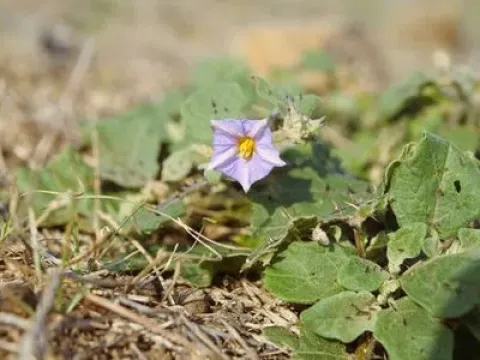
Wave-leaf nightshade
Solanum undatum
Solanum undatum, commonly known as wave-leaf nightshade, belongs to the Solanaceae family. While it exhibits perennial habits in its native habitat, it is cultivated as an annual in most temperate agricultural regions.
What the section contains
Wave-leaf nightshade
Seeds should be sown indoors in specialized seed trays 8 to 10 weeks before the expected last frost date. This ensures strong seedling development before transplanting into the field.
Germination requires consistent warmth, ideally between +22 °C and +25 °C. Using a heat mat can significantly improve uniformity in seed emergence and initial growth rates.
Once true leaves develop, seedlings must be transplanted into individual pots to prevent root competition. Adequate space is essential to promote the growth of a robust root system.
Hardening off is a critical stage before final outdoor transplanting. Gradually exposing young plants to outdoor wind and sun temperatures over 10-14 days minimizes transplant shock.
This crop thrives in locations with full sun exposure, requiring at least 6 to 8 hours of direct light daily. Insufficient light levels often result in stunted growth and reduced fruit yield.
Soil should be well-drained, fertile, and rich in organic matter. A slightly acidic to neutral soil pH, ranging between 6.0 and 6.8, is ideal for optimal nutrient availability.
Irrigation management is vital, particularly during the flowering and fruit development stages. The soil should remain consistently moist but never waterlogged to avoid root rot issues.
The plant performs best in warm climates with temperatures consistently above +20 °C. Exposure to cold drafts or temperatures dropping near +10 °C can lead to significant physiological stress.
Effective weed control during the early stages of growth is necessary to prevent competition. Utilizing organic mulches can help maintain soil moisture and suppress weed germination simultaneously.
Late blight is one of the most serious threats to Solanum undatum, especially during prolonged humid periods. Implementing proper air circulation between plants is a key preventive measure.
Powdery mildew may occur when humidity is high and airflow is restricted. Regular monitoring and the removal of affected foliage can prevent the spread of the fungal infection.
Colorado potato beetles represent a major pest risk. Consistent inspection of the undersides of leaves for egg clusters is necessary for integrated pest management.
Aphid infestations can weaken young plants and transmit viral diseases. Insecticidal soaps or neem oil treatments are effective non-toxic ways to manage these populations.
Practicing strict crop rotation is essential for soil health. Avoid planting nightshade species in the same spot for at least three to four years to prevent the buildup of soil-borne diseases.
Harvesting should be timed to match the fruit's maturity indicators, usually when the skin achieves a uniform, vibrant color and a firm texture.
Use clean, sharp shears to clip the fruit from the stem. Avoiding tearing or pulling the fruit prevents unnecessary damage to the plant's delicate branches.
Harvesting is typically a multi-pass process, as fruit on the plant will not reach maturity at the same time. Frequent checks are recommended for maximum yield quality.
Post-harvest, fruit should be kept in a cool, well-ventilated location to extend shelf life. Avoid exposing harvested crops to direct sunlight, which can accelerate moisture loss.
Proper storage temperatures should hover around +10 °C to +12 °C. Maintaining these conditions ensures that the quality and nutritional value of the harvest are preserved before final use.