
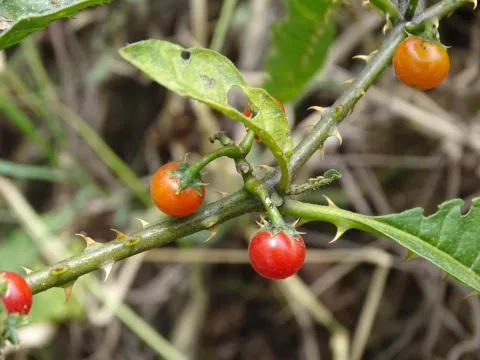
Wetland nightshade
Solanum tampicense
Wetland nightshade (Solanum tampicense) is a perennial, prickly shrub belonging to the Solanaceae family. In agronomy, it is recognized as a highly invasive weed, particularly problematic in tropical and subtropical wetland areas where it can completely alter native plant communities.
What the section contains
Wetland nightshade
Originating from the Caribbean, Mexico, and Central and South America, this plant has adapted to diverse environments. It primarily thrives in shaded to semi-shaded wetlands, forested floodplains, and along riverbanks, showcasing extreme resilience to waterlogged soil conditions.
The plant grows as a scrambler, using its recurved prickles to climb over other vegetation. This architecture allows it to form dense, impenetrable thickets that outcompete native or cultivated plants for sunlight and nutrient resources.
Reproduction occurs both sexually via seeds and vegetatively. The small, bright red berries are easily dispersed by birds and flowing water, which facilitates rapid colonization of downstream agricultural areas or irrigation channels.
Management requires an integrated approach. While hand-pulling is possible for small infestations, the presence of sharp thorns makes it labor-intensive. Larger patches often necessitate systemic herbicides, applied with strict adherence to environmental safety guidelines.
The primary concern regarding this species is its potential to be toxic to livestock due to the presence of alkaloids. Like many nightshades, ingestion of the leaves or berries can lead to poisoning symptoms in domestic animals, making it a liability in grazing areas.
The weed acts as a significant competitor in agricultural settings. By occupying riparian zones, it frequently blocks water management systems and prevents the successful establishment of native plant species, causing indirect economic damage to farmers.
There are currently few natural enemies that can effectively manage its spread outside its native range. The absence of specific biological control agents means that the plant remains a persistent threat that requires ongoing monitoring and intervention.
Common plant pathogens and pests found in cultivated crops do not generally affect Solanum tampicense enough to reduce its vigor. Its robustness allows it to survive in conditions where most crops would perish or require significant soil amendments.
Preventative measures remain the best strategy. Farmers are advised to avoid moving soil or equipment that may carry seeds or stem fragments from infested to clean fields, ensuring that the integrity of the ecosystem is preserved through proactive field management.