
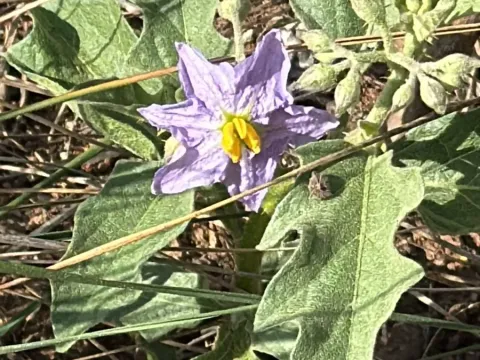
Western horsenettle
Solanum dimidiatum
Solanum dimidiatum is a perennial herbaceous plant known for its aggressive growth habit, often spreading through an extensive root system.
What the section contains
Western horsenettle
The establishment of new plants typically begins in early spring as ground temperatures rise, signaling the end of the winter dormancy period.
In agricultural environments, producers must be aware of the plant's early emergence cycle to effectively plan management or cultivation strategies.
Seed germination is less frequent than vegetative propagation, though it can occur in disturbed soils under favorable moisture conditions.
Strategic management of this plant requires attention to its seasonal growth phases to ensure success in field maintenance and crop rotation.
Western horsenettle thrives in well-drained, sandy or loamy soils, showing a preference for open areas with full sun exposure.
The plant is highly adaptable to drought conditions, maintaining its vigor even during periods of extreme heat and low rainfall.
It prefers neutral to slightly alkaline soil profiles, though it exhibits significant tolerance to a wide variety of soil textures.
Adequate soil aeration is critical, as the deep-reaching rhizomes require oxygen to sustain the plant's metabolic processes over time.
The climatic requirements are generally consistent with temperate regions, though it can survive in various microclimates due to its hardy nature.
The plant is susceptible to typical Solanaceae pests, most notably the potato beetle, which can cause severe defoliation during the growing season.
Fungal pathogens such as early blight and late blight frequently affect the foliage, especially when weather conditions are humid and mild.
Root-knot nematodes are known to impact the subterranean structures, leading to stunted growth and reduced overall vitality of the plant population.
- Powdery mildew
- Aphid infestations
- Verticillium wilt
- Spider mites
Effective control measures require an integrated approach involving both chemical applications and proper mechanical management of the soil surface.