
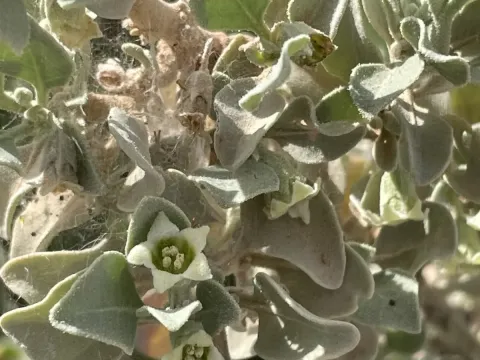
Withania adpressa
Withania adpressa
Withania adpressa is a perennial subshrub belonging to the Solanaceae family, requiring specific conditions for germination and early development. Seeds are typically sown in controlled greenhouse environments during late winter to ensure a robust start before the spring transplant.
What the section contains
Withania adpressa
Optimal germination requires a consistent temperature range of 20 to 25 degrees Celsius, alongside a well-draining, sterile substrate. Utilizing high-quality seeds with high vigor is essential, as the species can exhibit variable germination rates depending on environmental variables.
Seedlings should be pricked out into individual containers once they reach the two-leaf stage. This promotes root development and reduces competition, which is vital for the eventual growth of the plant into a healthy, mature specimen.
Hardening off is a mandatory process before moving plants to the field. This acclimatization period allows the plants to gradually adjust to outdoor temperature fluctuations and direct sunlight, preventing shock upon transplantation.
Spacing between plants should be approximately 50 to 60 centimeters to allow for optimal airflow. Good ventilation is crucial for reducing humidity levels around the foliage and stems, thereby preventing early-stage fungal outbreaks in the plot.
This species thrives in high-light conditions and is naturally adapted to arid environments. Providing full sun exposure for the majority of the day is necessary for the successful metabolic activity and chemical profile of the plant.
Soil quality must prioritize drainage above all else. Withania adpressa performs best in sandy or rocky soils that do not retain excess moisture, as waterlogged conditions are fatal to the plant's root system over time.
While the plant is drought-tolerant, supplemental irrigation is required during the initial establishment phase and periods of extreme drought. Watering should be deep and infrequent, allowing the soil to dry out between each irrigation event.
Temperature management is critical in non-native climates. The plant is sensitive to frost and extreme cold, requiring a protective environment or greenhouse cultivation in regions that experience freezing winter temperatures.
Nutrient requirements are modest compared to other agricultural crops. The application of organic mulch or balanced, slow-release fertilizers during the growth phase supports healthy development without promoting excessive, weak foliage growth.
The yield of Withania adpressa is measured by the quality and weight of the harvested root biomass. Maximizing the production of valuable phytocompounds, such as withanolides, depends on the plant’s health and the age of the crop at harvest.
Generally, a two-year growth cycle is recommended to ensure that the root system has accumulated sufficient secondary metabolites. Harvesting too early can result in significantly lower concentrations of the medicinal compounds desired for commercial use.
Management practices, such as removing flower buds in the early growth stages, can help redirect plant energy toward root expansion. This practice is often employed by growers to maximize the overall value of the plant parts harvested.
Maintaining proper soil fertility and moisture levels throughout the growth cycle prevents growth stunts. A well-managed crop can produce consistent yields, providing a reliable source of raw material for pharmaceutical and health industries.
Records of yield should be maintained to evaluate the performance of different planting densities. As a specialty crop, optimizing the output per square meter is essential for the economic viability of the agricultural operation.
Common pests include aphids and spider mites, which can cause significant stress to the plant during warm, dry weather. Monitoring and early detection are key to managing these infestations before they spread across the field.
Fungal pathogens like Fusarium and Rhizoctonia pose a constant risk, particularly if the soil remains excessively moist. These pathogens target the root and stem bases, leading to wilt and eventual death of the affected plant.
Crop rotation is a standard preventative measure to break the life cycle of soil-borne diseases. Avoiding the planting of other Solanaceae family crops in the same space for several years is necessary to keep the soil environment clean.
Integrated Pest Management (IPM) strategies, including the use of beneficial insects or biological sprays, are preferred over broad-spectrum chemicals. This approach ensures the final raw material remains safe and meets regulatory standards.
Regular inspection of the root zone and foliage is necessary. Any sign of yellowing or spotting should be investigated immediately, with infected plants removed to prevent further spread of potential pathogens.
Harvesting usually occurs in late autumn, when the aerial parts of the plant naturally begin to senesce. This timing ensures that the plant has stored the maximum possible quantity of phytochemicals in its taproot system.
Roots should be carefully excavated using garden forks, taking great care to avoid bruising or breaking the main root. Any mechanical damage can lead to rapid degradation or loss of quality during the drying process.
Post-harvest processing involves thorough cleaning to remove dirt and debris. Roots should then be sliced or processed to facilitate uniform drying, which prevents internal spoilage and ensures a stable shelf life for the medicinal material.
Drying must take place in a temperature-controlled environment, away from direct sunlight. High temperatures can degrade the delicate compounds within the roots, making precision in the drying phase vital for product quality.
Once dried to the desired moisture level, the roots should be stored in cool, dark, and dry conditions. Proper packaging, such as breathable fabric or light-proof containers, prevents mold and maintains the integrity of the bioactive components.