
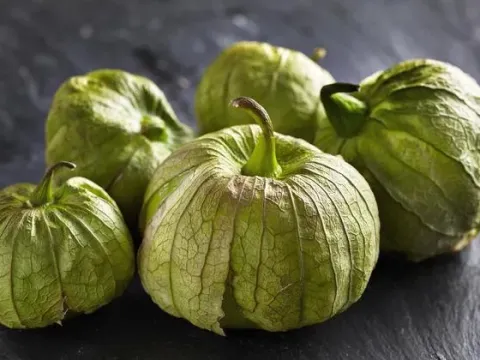
Tomatillo
Physalis ixocarpa
Physalis ixocarpa, commonly known as tomatillo, is a warm-season annual plant belonging to the Solanaceae family, originating from Mexico and Central America.
What the section contains
Tomatillo
Due to its long growing season, starting seeds indoors 4–6 weeks before the last frost date is the recommended method to ensure a successful and timely harvest.
Seeds should be sown in a well-draining potting mix at a depth of about 1 centimeter, maintaining temperatures around 22–25 degrees Celsius for optimal germination.
Once true leaves appear, seedlings are transplanted into individual containers to develop a robust root system before being hardened off for outdoor planting.
Transplanting into the garden occurs only after the soil has thoroughly warmed and all risk of frost has passed, ensuring steady growth from the start.
Tomatillos thrive in full sunlight, requiring at least 6 to 8 hours of direct exposure daily to produce high-quality, flavorful fruit and maintain plant health.
The ideal soil is well-drained, fertile, and slightly acidic to neutral in pH, with good organic matter content to support the vigorous growth of the bushy plants.
Consistent moisture is vital, especially during the flowering and fruit-setting stages, though waterlogging must be avoided to prevent root and crown diseases.
These plants perform best in temperatures between 20 and 30 degrees Celsius; extreme heat may cause blossoms to drop, while cold inhibits metabolic processes.
Proper spacing is crucial for air circulation, which helps reduce the incidence of fungal pathogens that often affect dense foliage in the Solanaceae family.
A single, healthy tomatillo plant can produce significant yields, often reaching 3 to 6 kilograms of fruit depending on the cultivar and environmental conditions.
To maximize fruit set, it is often necessary to plant more than one individual, as many tomatillo varieties are self-incompatible and require cross-pollination.
The fruit develops inside a papery husk, which expands as the berry grows; the filling of this husk is a primary indicator of fruit development and maturity.
Regular harvesting of mature fruit encourages the plant to continue producing new blossoms and berries throughout the remainder of the growing season.
Yield efficiency is further improved by providing sturdy supports, such as cages or trellises, which keep the heavy fruit off the ground and improve access.
Fungal diseases like powdery mildew and late blight represent the most significant threats, particularly in humid climates where airflow is restricted around the plants.
Common insect pests include the tomato hornworm and various beetles, which can strip foliage and significantly reduce the photosynthetic capacity of the plants.
Root-knot nematodes can also pose a problem in warm climates, so practicing crop rotation with non-solanaceous species is a key management strategy.
Bacterial wilt may occur in poorly drained soils, making site selection and soil preparation fundamental steps in preventing widespread plant collapse.
- Regular monitoring for signs of infestation or disease.
- Use of row covers to prevent early-season insect attacks.
- Application of organic fungicides if conditions favor blight.
Harvesting begins when the fruit matures and fills the husk, causing it to split open; at this point, the fruit is firm and ready for culinary use.
The fruit should be handled carefully to avoid bruising, as damaged skins decrease shelf life and increase susceptibility to secondary microbial infections.
If frost is imminent, unripe fruit can still be harvested; they will continue to ripen indoors if kept in a cool, dry place with good ventilation.
For storage, tomatillos should be kept with their husks intact in a mesh bag or open container, which allows for proper airflow and prevents moisture buildup.
When stored in a refrigerator, fresh tomatillos can maintain their quality for several weeks, making them a highly versatile ingredient for year-round cooking.