
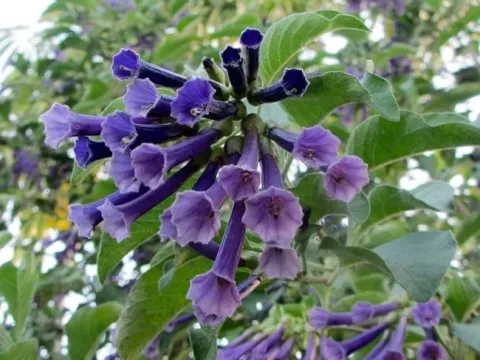
Iochroma
Iochroma
Iochroma is a genus of evergreen shrubs and small trees belonging to the Solanaceae family. Native to the cloud forests of the Andes in South and Central America, these plants have adapted to high-altitude environments. They are widely recognized for their spectacular clusters of tubular, bell-shaped flowers that bloom in vibrant shades of blue, violet, red, and white.
What the section contains
Iochroma
The botanical structure of Iochroma includes large, alternate leaves and a vigorous branching habit. As a member of the Solanaceae family, it shares genetic traits with other popular ornamental and agricultural plants, yet it stands out for its high ornamental value. In its native habitat, it provides nectar for hummingbirds, serving as a vital part of the local ecosystem.
To cultivate Iochroma successfully, one must provide a rich, well-draining soil medium, ideally slightly acidic to neutral. Ensuring the soil has consistent moisture without becoming waterlogged is essential for healthy root development. These plants thrive in locations with bright, filtered sunlight; harsh direct afternoon sun can lead to leaf scorching in hotter climates.
Climate management is crucial, as Iochroma is not frost-tolerant. It requires consistent temperatures, preferably between 18°C and 25°C. In regions with cold winters, it is typically grown in large containers, allowing it to be moved into greenhouses or conservatories to protect it from freezing temperatures and cold winds.
The primary use of Iochroma is decorative and horticultural. It is highly sought after by collectors for winter gardens and large container displays on patios. Its dramatic floral displays make it a prized specimen in subtropical landscaping, where it can be used to create tall hedges or focal points in architectural gardens.
The most common pests affecting Iochroma include spider mites, aphids, and whiteflies. These insects typically thrive in dry indoor environments where air circulation is poor. Regular inspection of the undersides of the leaves is recommended, along with periodic washing of the foliage to keep pest populations under control.
Pathological threats are generally associated with soil-borne fungi, often triggered by overwatering or poor drainage. Root rot is a significant concern that can lead to rapid decline. To prevent such issues, growers should utilize high-quality porous potting mixes and ensure containers have adequate drainage holes to prevent standing water.