
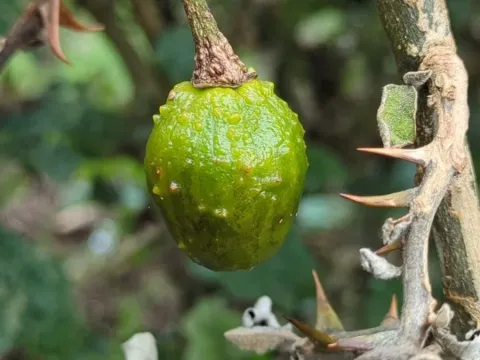
Solanum aculeastrum
Solanum aculeastrum
Solanum aculeastrum is typically propagated via seeds, which should be sown in a well-draining, nutrient-rich potting medium under greenhouse conditions.
What the section contains
Solanum aculeastrum
Seeds benefit from pre-sowing treatments, such as soaking in warm water, to soften the seed coat and improve overall germination rates.
Transplanting into the permanent garden site should occur once all risks of frost have passed and soil temperatures have reached an optimal growth range.
When planted as a hedge, spacing is crucial; the shrub grows vigorously and requires sufficient room to develop its characteristic dense, prickly structure.
Young plants require consistent moisture in the first several weeks to establish a robust root system before they become more drought-tolerant.
Native to tropical Africa, this member of the Solanaceae family thrives in warm climates and requires full sunlight to achieve maximum fruit production.
The plant prefers fertile, well-draining soils and is particularly sensitive to waterlogging, which can cause crown and root rot in heavy clay soils.
Agrotechnical management includes regular fertilization with organic matter during the spring season to support the rapid growth of stems and foliage.
While the plant is hardy in mature stages, protection from severe frosts and strong, desiccating winds is recommended to preserve the shrub's health.
Pruning is essential to manage the size and shape of the plant, especially since the species is covered in sharp thorns that make manual work difficult.
The shrub is susceptible to common solanaceous pests, including spider mites and aphids, which can compromise plant vitality during hot, dry weather.
Fungal pathogens such as blight can occur if the humidity levels around the foliage remain too high or if air circulation is insufficient within the dense canopy.
Integrated pest management strategies, including the use of horticultural oils and neem-based sprays, are effective in controlling infestations.
Sanitation is key to preventing disease; pruning and removing infected branches or fallen leaves helps to stop the spread of potential pathogens.
Monitoring for viral symptoms is also important, as insects can vector diseases that cause leaf curling and reduced development in these plants.
Harvesting the fruit is done when they reach full maturity, indicated by a bright orange or yellow coloration, denoting peak chemical potential.
Due to the aggressive, sharp thorns located on the branches, protective leather gloves are mandatory for any person working near the plant during harvest.
The fruits have historical usage in traditional medicine and are studied for their potential pharmacological properties, particularly regarding saponin content.
Post-harvest handling should be rapid, as the fruits are perishable and can degrade quickly if stored in humid, non-ventilated conditions.
In landscape management, the plant is harvested for its defensive properties, creating impenetrable barriers that serve as effective living fences.