
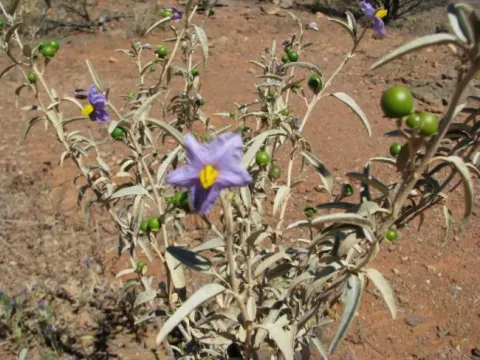
Solanum centrale
Solanum centrale
Solanum centrale, commonly referred to as the desert raisin, is a resilient member of the Solanaceae family. In its native Australian habitat, the species propagates naturally through seeds that germinate following significant desert rainfall events.
What the section contains
Solanum centrale
Cultivation requires specific seed treatment to overcome dormancy. Seeds are sown in well-draining, nutrient-poor substrates that replicate the sandy soils of the arid bush regions.
Transplanting should occur during periods of consistently high temperatures, as the root system of this species is extremely sensitive to cold-induced stress.
Seeds are sown at a shallow depth of approximately 0.5 cm, with moisture levels strictly monitored until the seedlings establish a robust taproot system.
Sufficient spacing, typically one meter between plants, is essential to accommodate the wide root architecture and the sprawling habit of the mature bush.
This crop is a classic xerophyte, highly adapted to the harsh conditions of Central Australia. It requires intense, full-spectrum sunlight throughout the entire photoperiod for optimal photosynthesis.
The soil must have exceptional drainage properties; any accumulation of water around the roots will inevitably lead to fungal pathogens and plant mortality.
An ideal temperature range for vegetative development lies between +25°C and +40°C. The plant cannot tolerate frost or prolonged cold periods, which trigger physiological damage.
Neutral to slightly acidic soil pH is preferred. While the plant is drought-tolerant, supplemental drip irrigation significantly improves fruit set and overall yield in commercial operations.
Low relative humidity is a critical requirement. High humidity levels hinder fruit maturation and promote the spread of foliar diseases, rendering the plant unsuitable for tropical zones.
The yield of Solanum centrale is highly contingent on water availability during the flowering and fruit-setting stages. Rainfall variability dictates productivity in wild populations.
On plantations, harvesting is performed sequentially as the fruits reach maturity. One healthy bush can produce between 500 grams to 1 kilogram of dried fruit per season.
The berries, measuring 1–2 cm in diameter, naturally desiccate while attached to the branches, developing a unique flavor profile often described as a mix of raisin and caramel.
Harvesting is typically done by hand due to the extended ripening period, although mechanical harvesters for berry crops can be adapted for large-scale operations.
Post-harvest processing involves final drying to ensure moisture levels are low enough to prevent spoilage during long-term storage or shipment.
Root rot, driven by poor soil drainage and excessive moisture, represents the primary threat to crop health and is difficult to treat once established.
In greenhouse settings, the plant is susceptible to spider mites and aphids, which exploit the warm and dry conditions to proliferate rapidly.
Foliar pathogens such as powdery mildew may develop if there is insufficient air circulation between plants, especially in poorly managed row configurations.
Regular monitoring of young foliage is necessary to detect leaf-eating insects that can cause significant defoliation during the early stages of growth.
- Ensure optimal drainage systems to prevent waterlogging.
- Implement strict sanitation practices for all agricultural equipment.
- Rotate crops to minimize the accumulation of soil-borne pathogens.
The harvest begins when the berries turn a deep brown color and exhibit a dry, shriveled texture, indicating they are ready to be detached from the peduncle.
It is vital to harvest before the fruit becomes overly brittle, as over-ripeness can lead to fruit drop and mechanical damage during handling.
The harvested product must be cleaned of twigs, leaves, and debris using air separators or vibrating screens to meet quality control standards.
Storage requires cool, dry, and airtight conditions to prevent the absorption of ambient moisture, which could lead to fermentation or pest infestation.
Properly dried and stored desert raisins maintain their organoleptic qualities for up to 18 months, making them a shelf-stable and highly valuable commodity.