
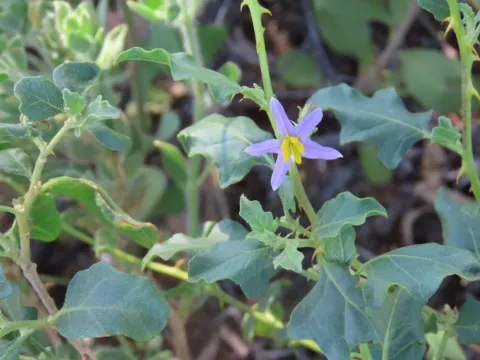
Solanum capense
Solanum capense
Solanum capense is a perennial semi-shrub belonging to the Solanaceae family. Originating from Southern Africa, this species has evolved to thrive in diverse ecological niches, ranging from arid scrublands to semi-open grassland environments.
What the section contains
Solanum capense
The plant requires full sun exposure to maintain its metabolic activity and structural integrity. While it exhibits significant drought tolerance due to its African origins, consistent moisture during the seedling and early flowering stages is essential for optimal biomass production.
Regarding soil conditions, Solanum capense prefers well-drained, porous soils with a slightly acidic to neutral pH. It is highly intolerant of waterlogged environments, which frequently trigger root rot and inhibit nutrient uptake, eventually leading to rapid decline.
Climatic requirements are strictly limited to frost-free conditions. The plant performs best in temperatures between 20°C and 30°C. In regions where temperatures drop significantly, cultivation must be conducted in greenhouses or managed as an annual crop.
Standard agronomic practices include mechanical weeding and regular application of balanced NPK fertilizers. The plant benefits from pruning, which helps manage its bushy growth habit and encourages lateral branching, improving overall structural health.
Solanum capense is susceptible to typical nightshade diseases, including early blight and various vascular wilts. These are often managed through crop rotation and maintaining spacing to allow for adequate ventilation and reduced humidity around the foliage.
Common insect pests include aphids, which cause leaf curling and transmit viral pathogens. Biological controls such as predatory beetles or lacewings are often preferred in sustainable farming systems to keep aphid populations below economic injury levels.
The Colorado potato beetle remains a primary threat to foliage integrity. Integrated pest management (IPM) strategies, including pheromone traps and localized chemical application during early infestation stages, are critical for maintaining crop yield.
Spider mites can become a problematic pest in greenhouse environments with low humidity. Regular misting and monitoring are necessary to prevent population explosions that can lead to leaf yellowing and premature abscission.
To ensure long-term sustainability, farmers should prioritize soil health by incorporating compost and avoiding mono-cropping. Regular inspection protocols are vital to catch early symptoms of viral infections or fungal infestations before they spread across the entire plantation.