
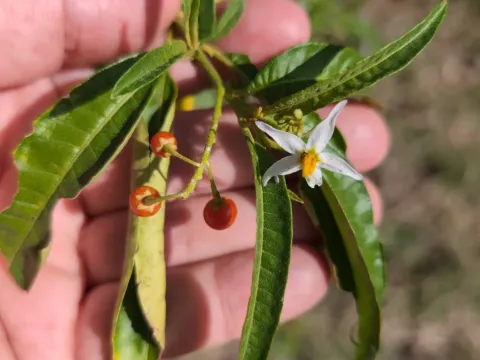
Bahama nightshade
Solanum bahamense
Bahama nightshade is a perennial shrub belonging to the Solanaceae family. Propagation is primarily achieved through seeds, which require controlled environmental conditions to germinate effectively.
What the section contains
Bahama nightshade
Sowing should be initiated in late winter or early spring using a well-draining, sterile potting medium. Seeds should be sown at a shallow depth to ensure sufficient light exposure for triggering germination.
The germination period requires consistent warmth, typically between 22 and 25 degrees Celsius. Maintaining uniform moisture is essential during this stage, while avoiding waterlogging that could lead to fungal damping-off.
Seedlings should be transplanted into individual pots after the development of their first set of true leaves. This promotes robust root growth before the plants are moved to their permanent growing location.
Hardening off the plants is a necessary step before transferring them to the outdoor environment to prevent transplant shock caused by sudden changes in wind, light, and temperature.
This species thrives in high-light environments and requires full sun exposure to maintain structural integrity and maximize fruit production throughout the growing season.
Soil quality is paramount for the health of Solanum bahamense. It prefers sandy or loamy soils that possess excellent drainage characteristics, mirroring its natural coastal habitat.
The plant demonstrates a remarkable tolerance for various soil types, including those with moderate salinity, which makes it a resilient choice for coastal landscape restoration.
Irrigation practices must be balanced; while the plant requires consistent water during the vegetative growth phase, it is vital to allow the soil surface to dry slightly between watering sessions.
Temperature management is crucial as the Bahama nightshade is frost-sensitive. In colder climates, it must be protected or moved indoors during winter months to ensure survival.
Like many members of the Solanaceae family, the Bahama nightshade is susceptible to a variety of pests and pathogens that can impact plant vigor.
- Spider mites and aphids, which can infest foliage and sap vitality.
- Whiteflies, particularly in greenhouse or humid outdoor conditions.
- Root rot pathogens triggered by poor drainage and excessive moisture.
- Fungal leaf spots that appear during periods of high humidity and poor air circulation.
- Tobacco mosaic virus, to which many nightshades are naturally prone.
Integrated Pest Management (IPM) strategies, including regular inspections and the use of insecticidal soaps, are recommended to control infestations without harming beneficial insects.
Proper spacing between plants is essential to ensure adequate airflow, which is a primary cultural method for preventing the spread of fungal diseases within a crop.
Harvesting the fruits of the Bahama nightshade requires observation of color changes, as the berries transition from green to a distinct bright orange or yellow hue.
The harvest should be performed carefully, as the plant stems are often protected by thorns, necessitating the use of gloves to prevent skin irritation or punctures.
Collected berries are often dried in thin layers under shade to preserve the integrity of their phytochemical constituents, which are of interest in botanical research.
If the plant is grown for decorative purposes, the fruits can be left on the bush for an extended period, providing visual interest in the landscape late into the season.
Post-harvest management involves separating the seeds from the pulp if propagation material is required for the following season, followed by thorough drying of the seed stock.