
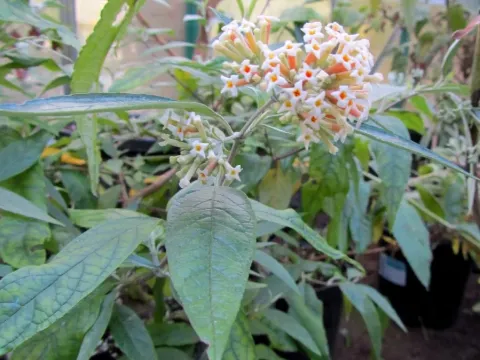
Buddleja officinalis
Buddleja officinalis
Propagation of Buddleja officinalis is primarily achieved through seed sowing or stem cuttings. Seeds should be sown in late winter or early spring using a sterile, well-draining seed-starting mix in a greenhouse or controlled environment.
What the section contains
Buddleja officinalis
Stem cuttings are the preferred method for propagating specific cultivars to ensure uniformity. Semi-hardwood cuttings of approximately 10-15 cm are taken in mid-summer and placed in a misting propagation bed to facilitate rapid root development.
Once established, young plants are hardened off gradually to withstand external weather conditions. Planting in the field or permanent site should occur after the last frost to ensure the root system is well-established before winter.
Site preparation involves deep tilling and the incorporation of organic matter. A well-drained soil structure is essential, as the plant is highly susceptible to root decay if water accumulates around the base.
Spacing requirements vary depending on the intended use; however, for production plots, a spacing of 1.5 to 2 meters is generally recommended to ensure adequate airflow and prevent the development of fungal pathogens.
Buddleja officinalis, a member of the Scrophulariaceae family, is an evergreen shrub native to the mountainous regions of China. It is highly valued for its aromatic flowers and its presence in traditional medicinal practices.
The plant thrives in full sun conditions, which are critical for the accumulation of active compounds and the initiation of abundant flowering. Partial shade may result in leggy growth and significantly reduced blossom density.
Soil requirements include high fertility and a neutral to slightly alkaline pH. Proper soil drainage is the most vital factor in the success of the crop, as the species does not tolerate "wet feet" during the dormant season.
Climatic adaptability is moderate; while it tolerates some temperature fluctuations, it requires protection in regions with harsh frosts. In cooler climates, mulching around the root zone is a common practice to prevent deep freezing.
Regular maintenance includes an annual structural pruning after the flowering season. This practice removes old wood, encourages vigorous new growth, and keeps the plant canopy healthy and productive for subsequent seasons.
Spider mites are the most common pest, particularly during hot and dry summer months. Effective management includes regular foliage misting and the application of biological controls if infestation levels reach economic thresholds.
Whiteflies can also impact the growth of Buddleja officinalis by feeding on sap and excreting honeydew, which fosters soot-like fungal growth. Integrated pest management strategies, such as neem oil application, are often employed.
Root rot, primarily caused by excessive soil moisture and poor drainage, remains the most significant threat to plant longevity. Prevention focuses on irrigation management and ensuring that soil moisture levels remain balanced.
Powdery mildew is a frequent fungal disease characterized by a white, dusty appearance on leaves. Improving air circulation through thinning and proper spacing is a primary cultural method to suppress its development.
Fungal infection risks can be mitigated by disinfecting pruning tools between different shrubs. Monitoring the health of the foliage throughout the growing season allows for early intervention and effective containment of any outbreaks.
The harvest of Buddleja officinalis focuses on the collection of flowers and leaves for pharmaceutical use. Harvesting should be performed during the peak of the flowering stage, when the secondary metabolites are most concentrated.
After harvesting, the plant material must be dried carefully in a shaded, well-ventilated area. Controlled heat drying at low temperatures helps to preserve the integrity of the essential oils and volatile compounds within the tissues.
Post-harvest processing involves sorting and grading the dried material to remove woody stems and any foreign matter. Storage must be conducted in airtight containers in a cool, dry place away from direct light.
The therapeutic applications of the plant are diverse, traditionally focusing on its anti-inflammatory properties, particularly in treating ocular conditions and respiratory ailments, backed by historical ethnobotanical uses.
Beyond its pharmaceutical value, the plant is a critical nectar source for pollinators, making it an essential component of sustainable agriculture. Its presence supports local biodiversity and enhances the overall ecological health of the planting site.