
Festulolium
Festulolium
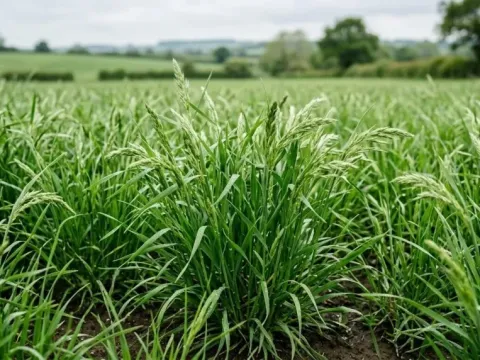
Festulolium is a man-made intergeneric hybrid created by crossing fescue (Festuca) and ryegrass (Lolium). By combining the cold tolerance and persistence of fescue with the rapid growth and high feed quality of ryegrass, it serves as a versatile forage solution for various agricultural environments.
What the section contains

Festulolium
The optimal time for sowing is during the early spring or late summer period. Adequate soil moisture is essential for germination and establishment. Autumn planting must be done early enough to allow the plants to develop sufficient root mass and tillering before the onset of winter dormancy.
Seed rates typically range from 15 to 25 kg per hectare, depending on whether the stand is intended for short-term intense grazing or long-term hay production. Proper calibration of seeding equipment is vital to ensure an even distribution of seeds across the field.
Seed placement should be shallow, generally 1–2 cm deep. The use of a cultipacker or roller before and after sowing is highly recommended to improve soil-to-seed contact, which significantly increases the uniformity of emergence and early stand density.
As a vigorous grower, Festulolium establishes quickly and begins competitive growth soon after emergence. Effective management in the first year focuses on allowing the plants to mature sufficiently before the first grazing cycle, ensuring the survival and vigor of the crown.
Festulolium performs best on fertile, well-structured, and well-drained soils with a pH ranging from 6.0 to 7.0. While it can adapt to various conditions, it shows exceptional yield responses to balanced fertilization, particularly nitrogen inputs.
This grass species is noted for its high level of ecological adaptability. It demonstrates better tolerance to waterlogged conditions than many pure ryegrass varieties and maintains production during dry spells, thanks to the deeper rooting characteristics inherited from its fescue parentage.
Winter hardiness is a major advantage of Festulolium. Unlike many intensive pasture grasses that are susceptible to winter kill, this hybrid survives harsh winters effectively, ensuring reliable stand persistence across multiple years of production in colder climates.
Soil testing is essential to determine the need for lime or additional nutrients. If the soil is too acidic, liming must be carried out prior to seeding, as this directly affects the longevity and overall dry matter yield of the stand over time.
Avoid planting in areas with long-term standing water or extremely poor drainage. Although the hybrid is robust, excessive saturation can impede oxygen availability to the roots, potentially leading to stand thinning and the encroachment of undesirable invasive weed species.
Festulolium is recognized for its superior dry matter yield. Under intensive management, it can produce 12–15 tonnes of dry matter per hectare per year. It effectively bridges the yield gap between short-lived high-performance grasses and long-term meadow fescues.
The forage quality is consistently high, characterized by good protein content and high energy density. These nutritional attributes make it an excellent choice for dairy and beef cattle, supporting high levels of milk production and rapid weight gain in livestock.
The crop is highly responsive to nitrogen fertilization. Each unit of nitrogen applied typically results in a substantial increase in vegetative growth, making it a cost-effective choice for farmers who utilize intensive rotational grazing or multi-cut silage systems.
- Reliable performance across multiple harvest cycles.
- Excellent regrowth potential after grazing or mowing.
- Compatibility with other forage legumes in complex seed mixtures.
The productive life span of a stand is generally between 5 and 7 years. After this period, the plant density may decline, and incorporating legumes into the stand or rotating the field to another crop is recommended to maintain soil health and forage efficiency.
Common fungal diseases such as leaf rust and powdery mildew can occur, especially in humid conditions or overly dense stands. Management practices that promote airflow, such as timely mowing, help reduce the prevalence and severity of these infections.
Insect pests like aphids and grass-feeding beetles can occasionally impact stand health. Regular field monitoring is critical to detect infestations early and allow for targeted management, including the use of biological control agents or authorized insecticides if necessary.
Soil compaction can weaken the root system, making the plants more vulnerable to disease and moisture stress. Utilizing lightweight equipment and avoiding field work during wet soil conditions are effective non-chemical strategies for maintaining long-term plant health.
Proper nutrient management is a key tool in disease resistance. Excessive nitrogen application can lead to lush, soft growth that is more attractive to pests and susceptible to fungal attacks, so following soil test recommendations is a standard safety measure.
Selecting certified, disease-resistant seed varieties is the most effective preventative measure. Modern breeding programs prioritize health and vigor, offering producers high-quality seeds that have been vetted for performance in diverse environmental conditions.
Harvesting for hay should be timed to coincide with the early heading stage. This balances biomass accumulation with the nutritional quality required for livestock, as delaying the harvest leads to lignification and reduced digestibility of the fiber content.
Silage production is best performed at the early flowering stage. This timing optimizes the sugar content, which is crucial for high-quality fermentation in silage bunkers or wrapped bales, minimizing storage losses and ensuring a stable, highly palatable final product.
Depending on local conditions and fertilization, 3–4 harvests per season are typical. A stubble height of 5–7 cm must be maintained to protect the crown of the plant and ensure rapid recovery and regrowth for subsequent harvest cycles throughout the season.
Using modern mower-conditioners accelerates the drying process, which is essential in regions with unpredictable weather. Faster drying reduces the risk of quality degradation caused by rainfall while the cut grass is lying on the field.
Efficient post-harvest management, including immediate fertilization if necessary, promotes faster regrowth. Reliable harvest schedules allow producers to manage their feed inventories effectively, ensuring high-quality fodder for winter storage and reducing reliance on external inputs.